




You press the wall button, the door starts down, and then it stops or heads right back up. If you are asking, why wont garage door close, the problem is usually not random. Garage doors are built with several safety features, moving parts, and alignment points, so one small issue can keep the whole system from finishing the cycle.
The good news is that some causes are simple. The less good news is that a garage door is heavy, spring-loaded, and not something to force. A quick check can tell you whether this is a basic adjustment, a power issue, or a repair that needs a trained hand.
Why wont garage door close? Start with the safety sensors
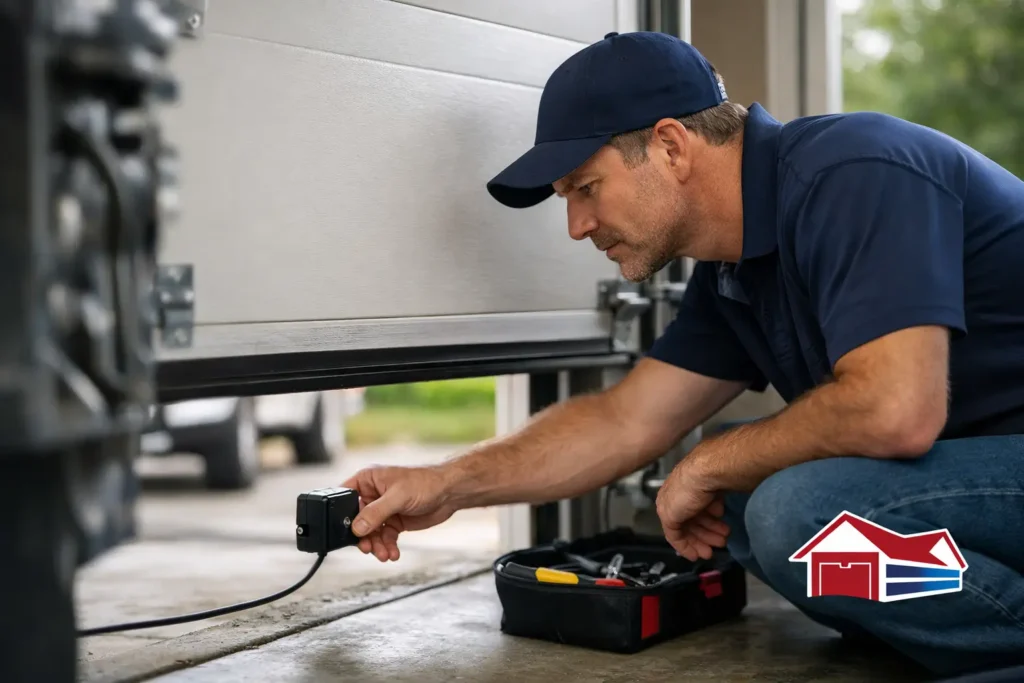
The most common reason a garage door will not close is the photo-eye safety sensors near the floor. These small units sit on each side of the opening and send an invisible beam across the doorway. If that beam is blocked, misaligned, or dirty, the opener may refuse to close the door or may reverse it immediately.
This happens more often than people expect. A trash can gets nudged into the opening. Leaves, mud, or cobwebs collect on the lens. One sensor gets bumped by a shovel, mower, bike tire, or broom. In barns, workshops, and garages that see regular traffic, these small shifts are common.
Check for anything crossing the opening first. Then look at the sensors themselves. If one light is off or blinking, there is a good chance the units are not lined up correctly. Gently clean the lenses with a soft cloth and make sure both sensors are pointed directly at each other. If they still do not show steady indicator lights, the brackets may need adjustment or the wiring may be loose.
The door may be hitting an obstruction you do not notice
Sometimes the issue is not with the opener at all. The door may be contacting something on the ground and reading it as an obstruction. A small piece of lumber, packed snow, a rock, or uneven buildup along the threshold can stop the door from sealing properly.
This matters in Western Pennsylvania, where debris, ice, and seasonal movement can create problems fast. Even a slight hump in the floor or a frozen spot at the bottom seal can make the opener think the door has hit resistance. When that happens, the opener often reverses as a safety measure.
Look closely along the full width of the opening. If the bottom seal is catching on ice or the concrete has shifted, that can explain why the door closes partway but not all the way. If you clear the area and the problem continues, the opener settings may need attention.
Close-limit and force settings can be off
Garage door openers have limit settings that tell the motor how far the door should travel. They also have force settings that help the opener decide how much resistance is acceptable. If either setting is off, the door may stop short, reverse before fully closing, or refuse to stay down.
This often shows up after an opener has aged, after a power interruption, or after parts have been replaced. In some cases, the settings were adjusted previously to work around another issue, and now the door is behaving unpredictably.
A small adjustment may solve the problem, but this is where caution matters. If force settings are turned too high, the door can lose some of its built-in safety response. That is not a corner to cut. If your opener manual clearly explains the adjustment process and the door otherwise moves smoothly, a homeowner may be able to make a minor correction. If the door is jerking, binding, or reversing hard, it is better to have the system inspected rather than guessing.
A track or roller problem can stop the door
If the tracks are bent, blocked, or out of alignment, the door may not travel evenly enough to close. Worn rollers can also create drag that causes the opener to stop and reverse. You might hear scraping, popping, or a rough vibrating sound as the door moves.
This kind of issue tends to build over time. Maybe the door has been louder for months. Maybe it has looked slightly uneven but still worked. Then one day it finally reaches the point where the opener cannot push it through a full cycle.
Stand inside the garage with the door closed and inspect the vertical tracks on both sides. Look for dents, loose brackets, or debris in the channel. Check whether the rollers appear intact and seated properly. What you should not do is loosen track hardware or try to force the door back into alignment without understanding the system. Garage door tension components can be dangerous, and a bad adjustment can make the problem worse.
Broken springs are a major reason a garage door will not close properly
Torsion and extension springs do the heavy lifting. When one breaks or weakens significantly, the opener is left trying to move a door that is suddenly much heavier and less balanced than it should be. That can prevent the door from closing, cause uneven movement, or make the opener strain and reverse.
A broken spring is not always subtle. You may hear a loud snap from the garage and later notice the door will only move a few inches. In other cases, one side of the door may sag, or the opener may hum without getting the door fully down.
This is not a do-it-yourself fix. Springs are under high tension and can cause serious injury. If you suspect a spring problem, stop using the door and schedule service. Trying to force the opener to keep working can burn out the motor or damage other parts.
The manual lock may be engaged
This one is simple, but it gets overlooked. Some garage doors have a manual slide lock or bar lock mounted on the inside. If it has been partially engaged, the opener may not be able to complete the closing cycle correctly.
It can happen after someone manually secures the door and forgets about it, or after the lock gets bumped while moving items in and out of the garage. Before assuming you have a major mechanical problem, make sure any manual lock is fully disengaged.
Power and remote issues can create confusing symptoms
If the wall switch works but the remote does not, the issue may be with the remote battery, programming, or antenna. If nothing works consistently, the opener may be dealing with intermittent power, a failing logic board, or wiring trouble.
These problems can look like a door issue when they are really an opener issue. The door might start down and stop because the signal is dropping. Or it may seem unresponsive one minute and normal the next. That kind of inconsistency usually points away from a simple blockage and toward an electrical problem.
You can check the breaker, replace remote batteries, and confirm the opener is plugged in securely. Beyond that, diagnosis tends to require more than trial and error.
Why wont garage door close all the way? Weather can play a role
Temperature swings affect garage doors more than many people realize. Metal contracts and expands. Lubricants thicken in cold weather. Bottom seals stiffen. Wooden framing around the opening can shift slightly with moisture and seasonal changes.
That does not mean every winter issue is harmless, but it does mean a door that works fine in one season may start acting up in another. If the system is already slightly out of adjustment, cold weather often exposes it.
This is one reason regular maintenance matters. A tuned door with properly adjusted hardware, clean tracks, and balanced movement is less likely to leave you stuck when the weather turns.
What you can safely check before calling for service
There are a few sensible things a property owner can inspect without taking risks. Clear the door opening and sensor area. Clean the photo eyes. Look for obvious track debris. Confirm the manual lock is off. Test whether the opener has power and whether the remote battery is dead.
If the door is crooked, slamming, shaking hard, making grinding noises, or refusing to move evenly, stop there. Those are signs that the issue could involve springs, cables, rollers, or track alignment. That is repair territory, not routine troubleshooting.
A dependable garage door should close smoothly, seal properly, and respond the same way every time. If it does not, the smartest move is often a professional inspection before a smaller problem turns into a larger one. For homeowners and property owners who want a straight answer and practical repair options, Tri County Door & Builders takes that same no-nonsense approach.
A garage door that will not close is frustrating, but it usually gives you clues. Pay attention to what the door does, avoid forcing it, and treat unusual movement like the warning sign it is.