




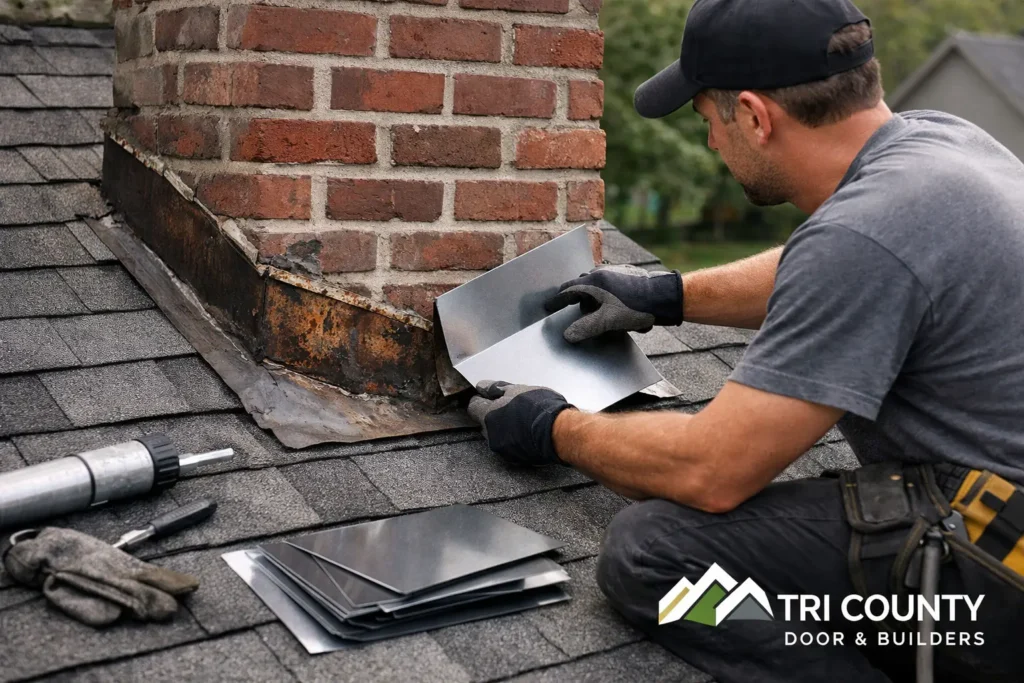
A roof can have shingles that still look serviceable and yet leak around a chimney, vent pipe, skylight, or wall intersection. In many cases, the problem is not the shingles. It is the flashing. Knowing when should roof flashing be replaced can help you address a small vulnerable area before it becomes stained ceilings, damaged sheathing, mold concerns, or an unexpected roofing bill.
Flashing is the metal material installed where water needs to be directed away from a roof joint or penetration. It works alongside the roofing system, not separately from it. Because it handles concentrated runoff and sits at some of the roof’s most exposed transitions, flashing deserves close attention during routine inspections and after severe weather.
What Roof Flashing Does for Your Property
Roofing shingles are designed to shed water down the slope of the roof. They are less effective at handling places where the roof changes direction or meets another material. Flashing closes those gaps and channels water safely onto the roof surface.
Common locations include chimneys, plumbing vents, exhaust vents, skylights, dormers, valleys, wall-to-roof connections, and step transitions where a roof meets siding. Depending on the application, flashing may be aluminum, galvanized steel, copper, or another compatible metal. It may also include sealant, but sealant should support properly installed flashing rather than serve as the only defense against water.
In Southwestern Pennsylvania, repeated freeze-thaw cycles, wind-driven rain, snow, and ice can all stress these details. A flashing issue may begin as a slight gap or a failed seal and become more noticeable after a hard winter or heavy storm.
When Should Roof Flashing Be Replaced?
Roof flashing should be replaced when it is corroded, cracked, bent beyond reliable repair, loose, improperly integrated with the roofing, or allowing water into the structure. It should also be evaluated whenever a roof is replaced. Even flashing that appears acceptable from the ground may have hidden wear at fasteners, seams, or areas covered by shingles.
Replacement timing depends on the material, installation quality, local weather exposure, and the condition of the rest of the roof. Well-installed metal flashing can last for decades. However, it does not always last as long as the roof covering around it. A roof that has had several patch repairs, layers of aging shingles, or recurring leaks may need flashing replacement sooner than expected.
A roofer should inspect flashing after any event that could disturb the roof system, including high winds, falling branches, chimney work, new siding installation, or major ice buildup. Waiting for a visible interior leak is rarely the best approach. By the time water reaches a ceiling, it may have already traveled along decking, framing, insulation, or a wall cavity.
Visible Rust, Pitting, or Corrosion
Rust is one of the clearest signs that galvanized steel flashing is reaching the end of its useful life. Surface discoloration alone may not mean immediate failure, but flaking metal, deep pitting, holes, or deteriorated seams do. Corrosion weakens flashing and can prevent it from directing water as intended.
This is particularly common near chimneys, where masonry moisture and runoff can affect metal over time. Different metals can also react when installed together incorrectly. A professional inspection can determine whether localized replacement is enough or whether surrounding sections should be updated at the same time.
Loose, Lifted, Cracked, or Missing Sections
Flashing needs to lie flat, overlap correctly, and remain secured without relying on excessive exposed fasteners. Wind, thermal movement, aging sealant, and poor original installation can cause metal edges to lift or pull away from the roof or wall.
Look for bent pieces, open seams, missing sections, popped nails, or flashing that has separated from a chimney or sidewall. These conditions create a direct route for water. Applying roofing cement to a large gap may slow a leak temporarily, but it is not a dependable long-term repair when the metal itself is damaged or incorrectly installed.
Stains, Drips, or Damp Areas Indoors
A brown ceiling stain near a chimney or skylight does not automatically prove the flashing is at fault, but it should be investigated quickly. Water can enter at a flashing detail and travel several feet before showing up inside. Damp insulation in an attic, mildew odor, peeling paint, or wet framing are also warning signs.
Do not assume that a leak only happens during rain. Ice dams and melting snow can force water upward beneath shingles, exposing weak points around flashing. If an interior stain grows after winter weather, a roof and attic inspection is especially worthwhile.
Repeated Repairs at the Same Spot
One repair may be normal during the life of a roof. Repeated caulking, patching, or shingle replacement around the same chimney, vent, or wall intersection is different. It often indicates that the underlying flashing layout is wrong or that the materials have aged beyond a practical repair.
A lasting repair may require removing shingles around the affected area, replacing step flashing or counterflashing, and reinstalling the roof covering correctly. That is more involved than applying sealant, but it addresses the route water is taking rather than covering the symptom.
Replace Flashing During a Roof Replacement When It Makes Sense
A full roof replacement is usually the best opportunity to replace aging flashing. The surrounding shingles are already being removed, which gives installers access to the details that are difficult to inspect or repair otherwise. Reusing flashing can sometimes be appropriate if it is in excellent condition, properly sized, and compatible with the new roofing system. Still, that decision should be based on inspection, not simply on saving a small amount upfront.
Chimney flashing deserves special consideration. It often includes both base flashing at the roof level and counterflashing tied into the chimney masonry. If the counterflashing is loose, cracked, or poorly embedded, replacing shingles alone will not correct the leak risk. Likewise, new roofing around old corroded vents or damaged sidewall flashing can leave an otherwise sound roof with a weak point.
For homeowners planning a new shingle roof, compare the cost of replacing necessary flashing with the cost and disruption of opening a new roof later. A complete, well-detailed installation generally offers better value than carrying known problems forward.
Can Roof Flashing Be Repaired Instead of Replaced?
Sometimes, yes. Minor issues such as a small amount of failed sealant, a single loose fastener, or a limited area of separated flashing may be repairable if the metal is sound and the original installation was correct. Repairs are often practical on newer roofs after storm damage or around an isolated penetration.
Replacement is the better choice when metal has deteriorated, seams no longer fit properly, multiple areas are leaking, or the flashing was installed in a way that cannot reliably shed water. The right answer depends on what is underneath the visible surface. That is why an on-roof inspection is more useful than diagnosing the issue from a driveway or a photo alone.
Property owners should also be cautious about do-it-yourself repairs on steep roofs, around chimneys, or near brittle shingles. Beyond the fall risk, an incorrectly placed nail or a poorly lapped piece of metal can create a larger leak path. For experienced DIY customers, the key is following the roofing manufacturer’s installation requirements and using compatible materials.
Signs You Should Schedule a Professional Inspection
It is wise to have flashing checked if your roof is nearing the end of its expected service life, you see interior moisture, or you notice damage after a storm. An inspection is also appropriate before selling a property, purchasing an older home, or beginning related work such as chimney repair, new siding, or skylight replacement.
A qualified roofing professional can inspect the roof covering, attic conditions, penetrations, valleys, and wall transitions together. This broader view matters because water problems are not always limited to one piece of flashing. Worn shingles, poor ventilation, deteriorated decking, or ice-dam damage can contribute to the same symptoms.
For homeowners and property owners in Westmoreland, Somerset, and Fayette counties, a local contractor familiar with regional weather can help separate a minor maintenance repair from a condition that calls for replacement. Tri County Door & Builders can help customers evaluate roofing needs and choose practical materials without the Pittsburgh-area markup. Its current 30% off Owens Corning shingles campaign may also make a planned roof replacement more affordable.
If you suspect flashing has failed, the most useful next step is simple: have the area inspected before the next stretch of heavy rain or snow. A properly repaired flashing detail is a small part of the roof, but it protects much more than a small part of the property.