




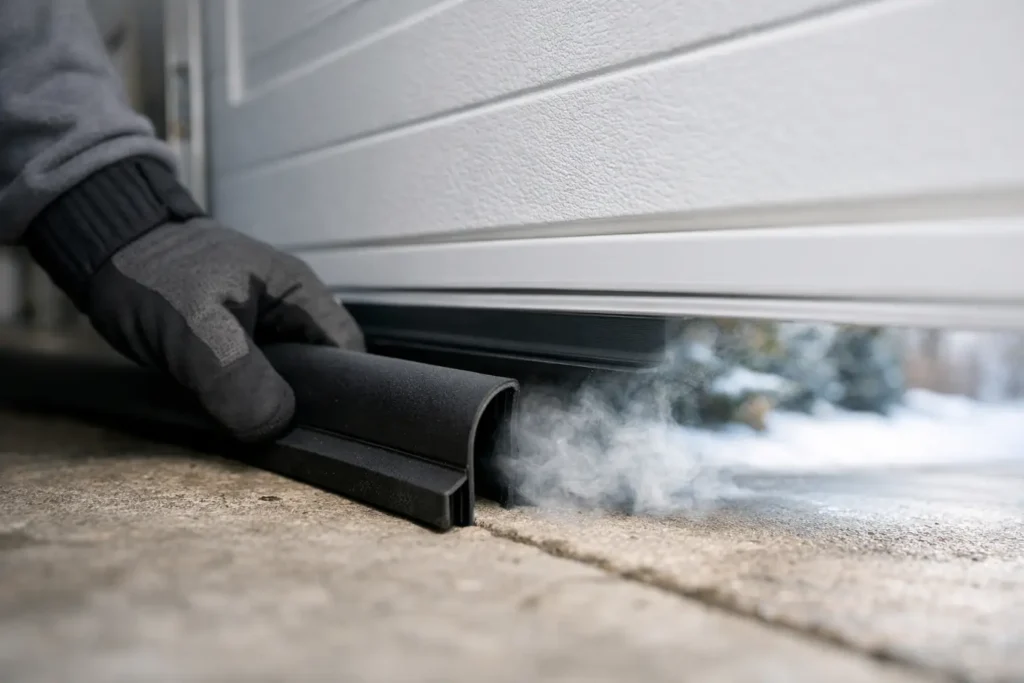
A garage can lose more heat, admit more moisture, and attract more pests through a worn door seal than many property owners realize. Garage door weatherstripping is a relatively small component, but it has a direct effect on comfort, energy use, stored belongings, and the condition of the garage floor. In Southwestern Pennsylvania, where wet springs, cold winters, and wind-driven rain are part of the yearly cycle, a tight seal around the door is practical protection.
A garage door does not need to be perfectly airtight. It does need to close evenly and keep out the weather that should stay outside. If you can see daylight at the bottom or sides of a closed door, feel a cold draft near an attached wall, or notice leaves and water making their way in, it is time to inspect the weatherstripping.
What Garage Door Weatherstripping Actually Does
Weatherstripping fills the small gaps between the garage door and its opening. The bottom seal contacts the concrete floor when the door closes, while side and top seals press against the face of the door. Together, these pieces help keep out rain, snow, wind, dirt, insects, and rodents.
For an attached garage, good sealing also helps limit the movement of cold air toward rooms next to or above the garage. It will not replace proper insulation in the garage door, walls, or ceiling, but it supports those upgrades. A well-insulated door with a damaged bottom seal can still let in a surprising amount of cold air and moisture.
For detached garages, workshops, farm buildings, and commercial bays, the concern is often less about conditioned air and more about protecting what is inside. Tools, equipment, feed, seasonal items, and vehicles all benefit from a drier, cleaner space. Keeping water from repeatedly crossing the threshold can also reduce staining, corrosion, and freeze-thaw damage near the entrance.
Signs Your Door Seals Need Attention
Rubber and vinyl seals do not last forever. Sun exposure, road salt, temperature swings, door movement, and contact with rough concrete slowly wear them down. A seal may look acceptable from a distance but fail to make consistent contact with the floor or jamb.
Look for cracks, hard or brittle rubber, flattened areas, torn corners, and gaps at either end of the door. If the bottom seal has a permanent bend or has pulled out of its retainer, replacement is usually more worthwhile than trying to patch it. Water stains just inside the door, pest activity, and debris collecting along the threshold are also clear warning signs.
Pay attention to how the door closes. If one corner reaches the floor before the other, the issue may not be weatherstripping alone. A door that is out of level, has worn rollers, or needs track and spring service will not seal correctly no matter how new the rubber is. The seal should be evaluated along with the overall operation of the door.
The Main Types of Garage Door Weatherstripping
The right product depends on the door style, the condition of the floor, and where the gap is located. There is no single seal that works best for every garage.
Bottom seals
Bottom seals are the flexible strips attached to the lower edge of the door. Many sectional doors use a U-shaped astragal that slides into an aluminum or plastic retainer. Others use a T-style seal that fits into tracks on the bottom of the door. These seals compress when the door closes and are the primary barrier against water and drafts at the threshold.
A bottom seal works best on a fairly smooth, level floor. If the concrete has low spots, cracks, or a noticeable slope, a standard replacement seal may still leave openings. A thicker bulb-style seal can sometimes handle minor irregularities, but large gaps may point to a floor issue or a door adjustment issue that needs to be addressed first.
Side and top stop molding
Vinyl stop molding, sometimes called perimeter weatherstripping, mounts to the exterior jambs and header around the opening. Its flexible flap presses against the closed door. This is especially useful when side gaps allow wind, rain, or insects to enter.
The fit matters. If stop molding is installed too tightly, it can create unnecessary friction as the door moves. If it is set too far back, it will not contact the door consistently. A proper installation provides a light, even seal without interfering with normal operation.
Threshold seals
A threshold seal is installed directly on the concrete floor where the closed door meets it. It creates a raised barrier that helps redirect surface water and improves contact when the floor is uneven. It can be a good solution for garages exposed to runoff from a driveway or for buildings with minor floor imperfections.
There is a trade-off. Threshold seals create a small raised edge that vehicles must roll over, and they need a clean, dry surface for reliable adhesion. They are useful in the right situation, but they should not be used to hide a garage door that is badly out of adjustment.
Brush seals for larger openings
Brush-style seals are commonly used around commercial doors, agricultural buildings, and some oversized openings. The bristles conform to uneven surfaces better than many rigid materials and can help control dust and wind. They are not usually the first choice for a typical residential sectional garage door, but they are practical for certain shop and utility building applications.
Choosing Material for Pennsylvania Weather
Vinyl weatherstripping is widely used, affordable, and effective for many residential doors. Rubber and EPDM-style materials tend to stay more flexible in cold temperatures, which can be valuable during repeated freezing conditions. The best choice depends on the specific door and the quality of the retainer or stop molding already in place.
Avoid choosing only by thickness. A thick seal that does not match the track, door profile, or floor condition can perform worse than a correctly sized standard seal. Measure the existing retainer, note the shape of the seal, and inspect the full width of the opening before buying replacement material.
For older doors, replacement may involve more than swapping out a strip of rubber. Damaged retainers, warped bottom sections, loose jamb material, and deteriorated stop molding can prevent a good seal. Correcting the supporting components is often what turns a short-term fix into a lasting repair.
Can You Replace It Yourself?
Many homeowners can replace a simple bottom seal or worn stop molding, particularly when the door is operating smoothly and the existing hardware is in good shape. The work typically involves measuring carefully, removing old fasteners or the old seal, cleaning the contact areas, and installing the new material without stretching it excessively.
The job becomes more complicated when the door needs adjustment, the tracks are bent, the bottom retainer is damaged, or the door has spring and cable concerns. Garage doors are heavy, and their spring systems are under significant tension. Weatherstripping work should not require handling springs, cables, or counterbalance hardware. If it appears that it does, stop and have the door inspected by a trained technician.
A professional installation also makes sense when water intrusion has been ongoing, when the floor is uneven, or when the door serves a workshop, farm building, or commercial space where downtime matters. An experienced installer can identify whether the problem is the seal itself or the alignment of the entire door.
A Simple Seasonal Inspection Routine
Check garage door seals at least twice a year, ideally before winter and after the harshest weather has passed. Open the door and clear leaves, grit, and packed debris from the bottom edge and tracks. With the door closed, inspect the bottom corners and perimeter from both inside and outside.
Test for visible light during the day, then look for water trails after a hard rain. Listen for rubbing or scraping as the door operates. These small checks can catch a failing seal before a cold snap turns a minor gap into a wet, drafty garage.
Tri County Door & Builders helps property owners throughout Westmoreland, Somerset, and Fayette counties evaluate garage door repairs, replacement doors, and the details that help them perform properly. If a seal is worn, a straightforward replacement may be all that is needed. If the door is not closing squarely, addressing the underlying issue is the better investment.
A garage door should close with an even, dependable seal – not leave you wondering what the next rainstorm, cold morning, or rodent will bring inside.