




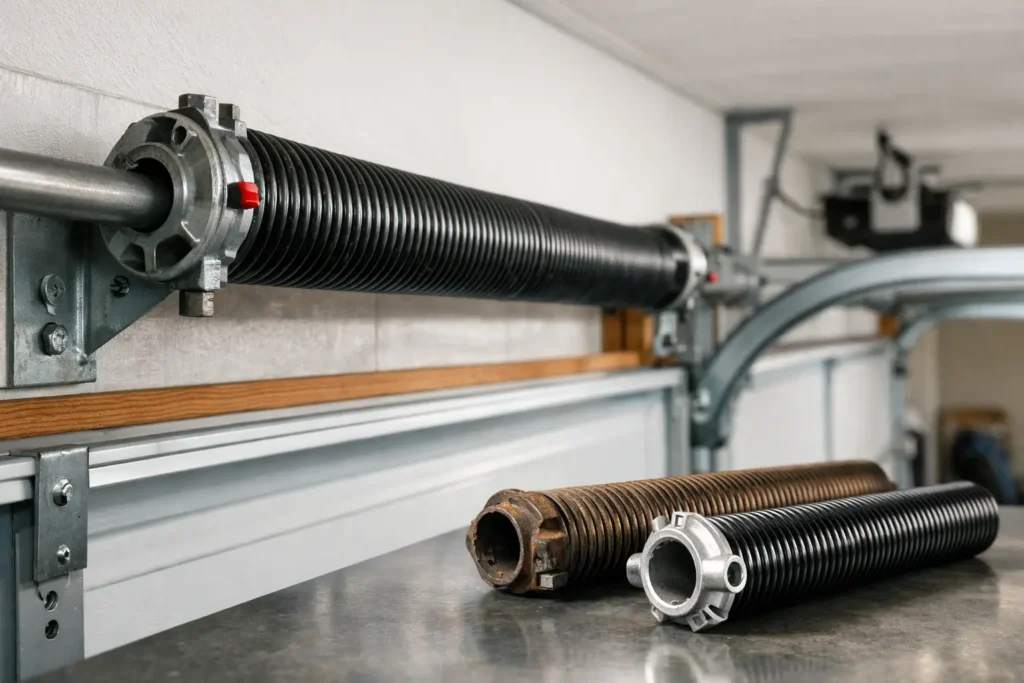
A broken garage door spring usually announces itself at the worst possible time: the door will not open, the opener strains, and a normal trip to work becomes a problem. A lifetime garage door spring can reduce the chances of that surprise, but the word “lifetime” deserves a closer look before you decide it is the right upgrade for your home, shop, or agricultural building.
Garage door springs do the heavy lifting. They counterbalance the door’s weight so it can move safely and smoothly by hand or with an automatic opener. When the correct springs are selected and installed properly, your opener has less work to do, the door stays better balanced, and the entire system tends to last longer.
What Does a Lifetime Garage Door Spring Mean?
Most garage door springs are rated by cycles, not simply by years. One cycle is one complete opening and closing of the door. A standard torsion spring may be rated for approximately 10,000 cycles. For a household that opens and closes the garage door four times each day, that can mean roughly seven years of normal use. A busy family, home-based business, or shop may reach that number much sooner.
A lifetime-rated spring is generally a higher-cycle spring designed for significantly more use, often 25,000 cycles or more. Some options are rated much higher. That does not mean the spring is guaranteed to outlast every other part of the garage door system, or that it will perform forever under every condition. It means the spring has a greater expected service life when it is correctly matched to the door and used under normal conditions.
The warranty language matters. Some “lifetime” offers cover the spring itself but not labor for future service. Others apply only to the original homeowner, require regular maintenance, or exclude damage caused by an unbalanced door, worn rollers, bent tracks, or accidents. A dependable installer should explain exactly what is covered before the work starts.
Why Spring Cycle Ratings Matter More Than Calendar Years
A garage door that is used twice a day and a garage door used ten times a day may have the same age, but they do not have the same wear. That is why cycle rating is a more useful buying tool than a broad promise about longevity.
Consider a few common situations. A detached garage that stores seasonal equipment may do well with standard springs. A family’s main garage door, where several drivers come and go throughout the day, often benefits from an extended-cycle option. For a commercial bay, farm building, or workshop with frequent access, higher-cycle springs can be a practical investment rather than an upgrade for its own sake.
The goal is not to buy the most expensive spring available. The goal is to install a spring that fits the weight of the door and the way the property is actually used. A spring that is too weak, too strong, or incorrectly sized can create operating problems even if it has an impressive cycle rating.
The Door Must Be Properly Balanced
Springs are not one-size-fits-all parts. Door height, width, weight, track configuration, insulation, windows, hardware, and drum size all affect spring selection. A heavier insulated steel door needs different counterbalance support than a light single-car door.
Proper balance is easy to overlook because the opener may still move an improperly balanced door for a while. But the extra strain can shorten the life of the opener, cables, rollers, hinges, and springs. When the door is disconnected from the opener by a trained technician, it should stay near the halfway point rather than crashing down or shooting upward.
That balance check is one reason professional measurement and installation are worth considering. A higher-cycle spring only delivers value when the full system is set up correctly.
Torsion Springs and Extension Springs
Many modern residential garage doors use torsion springs mounted above the door opening. These springs twist as the door closes and release stored energy as it opens. They are common because they provide controlled, even lifting force and can be selected in a wide range of cycle ratings.
Extension springs run alongside the horizontal tracks and stretch as the door closes. They are often found on older or lighter door systems. They can work well when properly installed with safety cables, but they have different service and safety considerations than torsion springs.
Neither system should be serviced casually. Garage door springs hold substantial stored energy. Trying to replace, wind, unwind, or adjust a spring without the correct tools and training can cause serious injury or property damage. If a spring breaks or the door suddenly feels unusually heavy, keep people clear of the area and arrange professional service.
When a Lifetime Garage Door Spring Is Worth the Cost
A lifetime garage door spring makes the most sense when your door gets regular use and you plan to keep the property for years. It can also be a smart choice when the garage is a primary entrance, where a broken spring causes an immediate disruption to daily routines.
For property owners, the value is not only fewer replacements. It is also fewer service appointments, less chance of being stuck with a door that will not open, and reduced wear on the operator when the door remains properly balanced. Those benefits matter especially during Southwestern Pennsylvania weather, when you may depend on the garage for secure vehicle access and protection from the elements.
There are trade-offs. A higher-cycle spring costs more upfront than a standard replacement. If you are selling soon, rarely use the door, or have a door nearing replacement for other reasons, a standard spring may be the more sensible choice. Honest recommendations should follow the condition of your door and your plans for the property, not a one-size-fits-all sales pitch.
Signs Your Garage Door Springs Need Attention
A spring does not always fail without warning. The door may become heavier to lift manually, close unevenly, make loud creaking or popping sounds, or reverse unexpectedly. You may notice a visible gap in a torsion spring above the door, which often indicates a break.
Other signs can look like an opener problem but are actually related to the springs. If the opener hums but cannot lift the door, the door opens only a few inches, or the safety release reveals a door that is very heavy, do not keep pressing the opener. Repeated attempts can damage the motor or internal gears.
Springs should also be inspected when the door has been hit, when cables appear loose, or when the door is no longer moving evenly. A spring replacement appointment is a good opportunity to assess rollers, hinges, cables, bearings, track alignment, and opener settings as well.
Getting More Life From Any Spring
Even a high-cycle spring benefits from basic care. Keep the tracks clear of debris, watch for loose hardware, and listen for changes in the door’s operation. Lubrication should be applied only with products suited to garage door components, and it should not be used as a substitute for correcting worn or damaged parts.
Most importantly, do not ignore a door that has become noisy, uneven, or difficult to move. Small issues can shift more stress onto the springs and opener. Regular professional inspection is particularly worthwhile for heavy insulated doors, commercial doors, and doors that see frequent daily use.
Tri County Door & Builders helps property owners choose garage door repairs and replacement parts based on real use, door condition, and budget. Whether a standard spring or a higher-cycle option is the better fit, the right answer starts with a properly balanced door and clear information about the work being done.
A garage door spring may be out of sight, but it should not be out of mind. Choosing the right cycle rating now can help keep one of the hardest-working doors on your property operating safely when you need it most.