




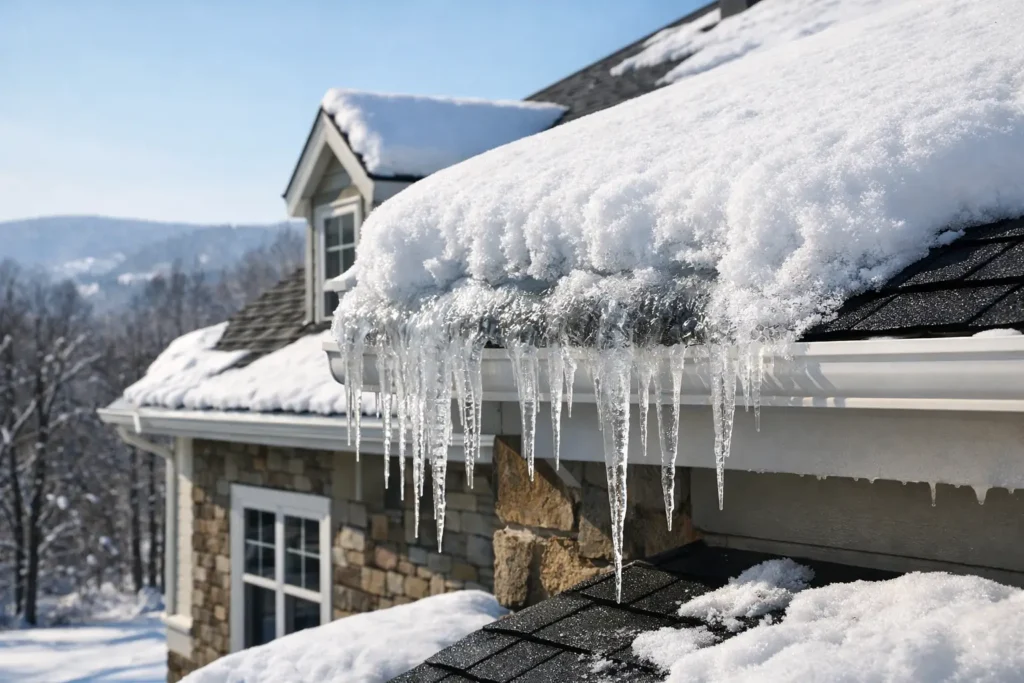
A thick line of ice at the edge of a roof may look like a normal part of a Pennsylvania winter. It is often a warning that heat is escaping from the home and melting snow in the wrong place. Effective ice dam prevention starts by controlling that heat loss, not by waiting until water is backing up under the shingles.
For homeowners, farmers, and property managers, ice dams can turn a stretch of freezing weather into stained ceilings, wet insulation, damaged trim, and expensive repairs. The good news is that many ice dam issues can be reduced with practical improvements to insulation, ventilation, air sealing, and roof maintenance.
What Causes an Ice Dam?
An ice dam forms when snow melts on the warmer upper portion of a roof, then refreezes near the colder eaves. The roof edge extends beyond the heated area of the building, so it often stays below freezing even when the roof deck farther up has warmed.
As the frozen ridge grows, it blocks melting water from draining into the gutters or off the roof. Water can then pool behind the ice and work its way beneath shingles, flashing, and roof underlayment. That is when leaks begin.
Snow alone is not the real problem. A properly performing roof can hold snow through cold weather without developing a damaging ice dam. The usual culprit is uneven roof temperature caused by warm air leaking into the attic, insufficient insulation, poor attic ventilation, or a combination of all three.
Ice Dam Prevention Begins in the Attic
The most durable solution is usually inside the building envelope. Keeping indoor heat inside the living or working space helps the roof deck remain cold and more uniform in temperature.
Seal Air Leaks Before Adding More Insulation
Insulation slows heat movement, but it does not stop warm air from slipping through gaps. Air leaks around plumbing stacks, electrical openings, recessed lights, attic hatches, chimneys, ductwork, and wall tops can send a surprising amount of heat into an attic.
Before adding insulation, those openings should be sealed correctly with materials suited to their location and fire-safety requirements. This step matters because warm, moist air in an attic can create more than ice dams. It can contribute to condensation, damp framing, and mold concerns over time.
The right approach depends on the home. Older properties often have many small bypasses that are easy to miss, while additions and vaulted ceilings may require a more detailed evaluation. A qualified insulation professional can identify where heat is actually escaping instead of guessing based on one cold room or a single roof stain.
Add Enough, Evenly Installed Insulation
After air sealing, insulation helps maintain a colder roof deck by reducing heat transfer from the rooms below. The goal is not simply to pile insulation into an attic. It needs to be installed evenly, without thin spots, compression, or gaps around framing.
Blown-in insulation can be especially useful for covering irregular attic floors and reaching areas around joists and obstructions. Batts can perform well when they are properly fitted, but gaps and poorly aligned pieces reduce their effectiveness. The best material and depth depend on the building, existing insulation, access, moisture conditions, and local energy recommendations.
Attic hatches deserve attention as well. An uninsulated or poorly sealed hatch can act like an open window into the attic. A well-fitted, insulated cover is a relatively small improvement that supports the larger insulation system.
Maintain Proper Attic Ventilation
Ventilation helps remove moisture and allows cold outdoor air to move through the attic space. In many conventional roof systems, intake ventilation at the soffits works with exhaust ventilation near the ridge. That airflow can help keep the roof deck colder and reduce moisture buildup.
However, ventilation is not a substitute for insulation and air sealing. Adding more vents to an attic that is leaking warm household air may not solve the problem. In some cases, it can make cold drafts more noticeable without addressing the heat source. The system has to work as a whole.
Soffit vents must also remain open. Insulation that blocks the eaves prevents intake air from entering the attic. Proper baffles create a channel above the insulation so air can move from the soffit toward the upper roof vents.
Exterior Roof Details Matter Too
A sound roof gives melting water fewer opportunities to enter if an ice dam does form. Shingles should be in good condition, flashing should be secure, and valleys, penetrations, and eaves should be installed with materials appropriate for winter weather.
A roof replacement is an opportunity to address weak details that may have contributed to recurring leaks. Ice and water protection beneath shingles at vulnerable roof areas provides an added layer of defense, but it should not be treated as a replacement for correcting attic heat loss. Underlayment can help manage water intrusion. It cannot fix the conditions that keep melting snow feeding an ice dam.
If your shingles are aging, curling, losing granules, or showing repeated leak concerns, it may be time to consider replacement before the next winter season. Tri County Door & Builders offers Owens Corning shingle installation and Pro-Cat insulation services for property owners who need practical guidance on both parts of the problem. Current savings on Owens Corning shingles can also make a planned roof replacement more affordable than waiting for a winter failure.
Winter Maintenance That Helps Without Damaging the Roof
When snow is already on the roof, homeowners naturally want a quick fix. Some methods are helpful, but winter roof work has real safety risks and should be approached carefully.
Using a roof rake from the ground to remove snow near the lower edge can reduce the amount of meltwater feeding an ice dam. Use a rake designed for roofing, work from a safe position, and avoid scraping aggressively against shingles. Removing every inch of snow is unnecessary. The purpose is to reduce the load near the eaves while avoiding damage to the roof surface.
Keep gutters and downspouts clear before winter arrives. Gutters packed with leaves and debris can freeze solid, making drainage problems worse. That said, clean gutters alone do not prevent ice dams when attic heat loss remains the underlying issue.
Avoid chopping ice with hammers, axes, shovels, or sharp tools. These methods can tear shingles, dent metal components, damage gutters, and create a serious fall hazard. Rock salt and other harsh de-icing products are also poor choices for most roofs because they can harm roofing materials, landscaping, and metal surfaces.
Roof heating cables can be useful in specific trouble spots, especially where roof geometry makes natural drainage difficult. They are a management tool, not a complete cure. If a home has widespread ice dams every winter, the better investment is usually diagnosing insulation, air sealing, ventilation, and roof condition.
When an Ice Dam Needs Professional Attention
Call for help promptly if you see water stains on ceilings, active dripping, sagging drywall, wet attic insulation, or large icicles paired with thick ice at the eaves. Those signs suggest that water may already be trapped behind the dam.
Professional steam removal is often the safest way to remove substantial ice without cutting into the roof. It should be performed by trained crews using the proper equipment. A contractor can also inspect the attic and roof once conditions allow, helping determine whether the issue came from heat loss, ventilation problems, roof wear, or several factors at once.
Commercial properties, pole buildings, garages, and agricultural structures deserve the same attention. Large roof areas, unconditioned sections, transitions between heated and unheated spaces, and complex drainage patterns can all create localized trouble. A solution that works on a simple ranch home may not fit a workshop, barndominium, or multi-use building.
Plan Before the First Hard Freeze
The best time to deal with ice dams is when the roof is dry and the attic is accessible. A fall inspection gives you time to repair shingles, clear gutters, seal attic bypasses, improve insulation, and confirm that vents are not blocked.
If an ice dam has formed more than once, treat it as useful evidence rather than bad luck. The pattern can point to where heat is escaping and where the roof system needs attention. Addressing that cause before winter gives your roof, attic, and interior spaces a much better chance of staying dry when snow and freezing temperatures return.