




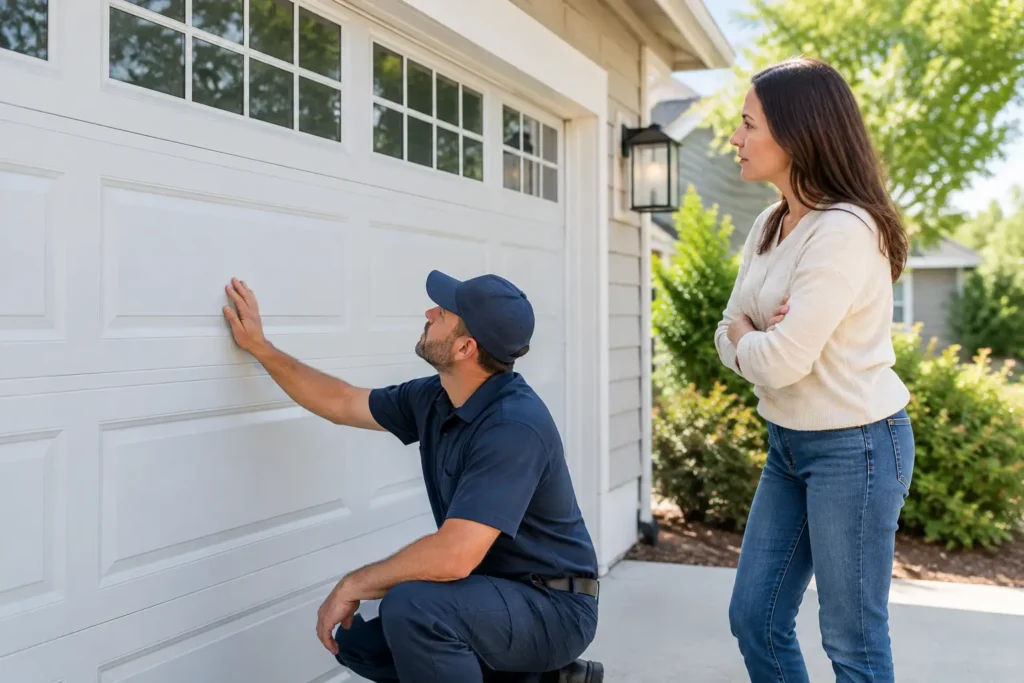
A garage door that hesitates, bangs, or will not close is more than an inconvenience when you are trying to leave for work, secure equipment, or protect your home from Southwestern Pennsylvania weather. Prompt garage door service in Greensburg can prevent a minor worn part from becoming a damaged door, a broken opener, or a safety concern for your family.
Garage doors are heavy, moving systems. Their panels, rollers, tracks, cables, springs, sensors, and opener must work together under tension. When one component begins to fail, the door may still operate for a while, but it is rarely a problem that improves on its own.
Signs You Should Schedule Garage Door Service in Greensburg
Some problems call for a repair appointment soon, while others mean you should stop using the door until a professional can inspect it. The key is paying attention to changes in how the door looks, sounds, and moves.
A door that opens unevenly or appears crooked in the track should not be forced with the opener. A loose cable, worn roller, bent track, or spring issue may be involved. Continuing to run the door can put additional strain on the opener and cause more extensive damage.
Loud grinding, popping, scraping, or repeated banging also deserves attention. Normal garage door operation has some sound, especially in an older system, but a sudden change usually points to hardware that needs adjustment, lubrication, tightening, or replacement. Squealing may be a simpler maintenance issue. A sharp bang followed by a door that will not lift is often associated with a broken spring.
Other warning signs include a door that reverses before closing, a remote that works inconsistently, panels that are cracked or separating, or an opener that runs without moving the door. Safety sensors may need alignment, but the issue can also involve the opener, limit settings, or the door’s balance.
If the door is stuck open, partially open, or will not lock down, treat it as a property security issue. This is particularly important for detached garages, workshops, farm buildings, and commercial spaces where tools, vehicles, and inventory may be exposed.
Why Springs and Cables Are Not DIY Repairs
Homeowners can safely handle a few basic tasks, such as replacing remote batteries, clearing debris from the sensor area, and keeping the tracks free of leaves or dirt. But spring and cable repairs are different.
Torsion and extension springs carry significant tension to counterbalance the weight of the door. Cables work under that same force. Improper handling can cause serious injury or damage to the door system. Even a door that seems manageable by hand can become unstable when a spring breaks or a cable comes off its drum.
A trained technician can identify whether the problem is a spring, cable, roller, bearing, track, or opener issue before replacing parts. That matters because treating the visible symptom without addressing the cause can lead to another breakdown shortly afterward.
What a Professional Garage Door Visit Should Cover
A worthwhile service call should go beyond getting the door moving again. The technician should evaluate the system as a whole, starting with the door’s travel and balance. A properly balanced door should not place unnecessary stress on the opener.
The inspection should also include the springs and cables, rollers, hinges, tracks, brackets, safety sensors, weather seal, and opener settings. For an insulated door, damaged sections or failed seals can affect comfort in an attached garage and allow rain, snow, pests, and drafts inside.
For property owners, the practical questions are straightforward: Is the repair safe? Is the door reliable enough for daily use? Will repairing this part make sense compared with replacing an aging door? The answer depends on the condition of the panels, the availability of replacement components, the age of the opener, and the role the garage plays in the property.
A newer door with a broken spring is often a clear repair candidate. A heavily dented, poorly insulated door with rusted hardware and an unreliable opener may justify replacement, especially when it is attached to the home or faces the street.
Repair or Replace? Consider the Full Cost
Repair is usually the practical choice when damage is limited and the door remains structurally sound. Replacing rollers, springs, cables, hinges, sensors, seals, or an opener can add years of dependable operation when the rest of the system is in good condition.
Replacement becomes more appealing when panels are damaged beyond repair, the door has recurring track or hardware problems, or the style no longer fits the property. Homeowners may also choose a new door for better insulation, stronger wind resistance, quieter operation, or improved curb appeal.
Material makes a difference. Steel garage doors are a popular option because they are durable and available in a wide range of styles and insulation levels. An insulated door can be especially valuable for garages that share a wall with living space, house a workshop, or store temperature-sensitive tools and supplies. However, the highest insulation rating is not automatically the best value for every detached garage. The right door should match how the space is used, the exposure it receives, and the owner’s budget.
For agricultural and commercial properties, durability and reliable operation often take priority over decorative features. A service provider should account for the size of the opening, vehicle traffic, usage frequency, and the demands placed on the opener and hardware.
Simple Maintenance That Helps Prevent Breakdowns
A little routine attention can extend the life of a garage door, particularly through wet, cold, and changing seasonal conditions. Check the door visually every few months for loose hardware, worn rollers, frayed cables, and damaged weather stripping. Do not touch cables or springs, but do look for obvious signs of wear.
Keep the photo-eye sensors clean and make sure nothing blocks their path near the floor. Test the auto-reverse feature by placing a small object in the door’s path, following the opener manufacturer’s instructions. If the door does not reverse as expected, stop using the automatic function until it is serviced.
Lubricating approved moving parts can reduce noise and wear, but use a product intended for garage door hardware. Avoid coating the tracks with heavy grease, which can collect dirt and interfere with roller movement. If the door begins sticking after lubrication or cleaning, the issue may be alignment or balance rather than dryness.
It is also wise to watch the bottom weather seal. A torn or flattened seal can let in water, road salt, leaves, and cold air. Replacing it early is generally simpler than dealing with damage to stored belongings or a damp garage floor.
Local Service Makes a Practical Difference
Choosing a local provider is not only about proximity. It means working with people who understand the mix of residential garages, rural properties, workshops, and small commercial buildings common around Greensburg and across Westmoreland County. The best recommendation for a lightly used detached garage may be very different from the right solution for a busy service bay or a heated attached garage.
Tri County Door & Builders has served Southwestern Pennsylvania since 1998 with practical guidance, garage door installation, and repair support for property owners who want quality work without a one-size-fits-all sales pitch. A clear inspection and honest explanation of repair versus replacement options help you make a decision based on the condition of your door, not pressure.
When your garage door starts showing signs of trouble, do not wait for it to fail when you need it most. A timely inspection can protect the door, the opener, and the belongings behind it, while giving you a safer and more dependable entry point every day.