




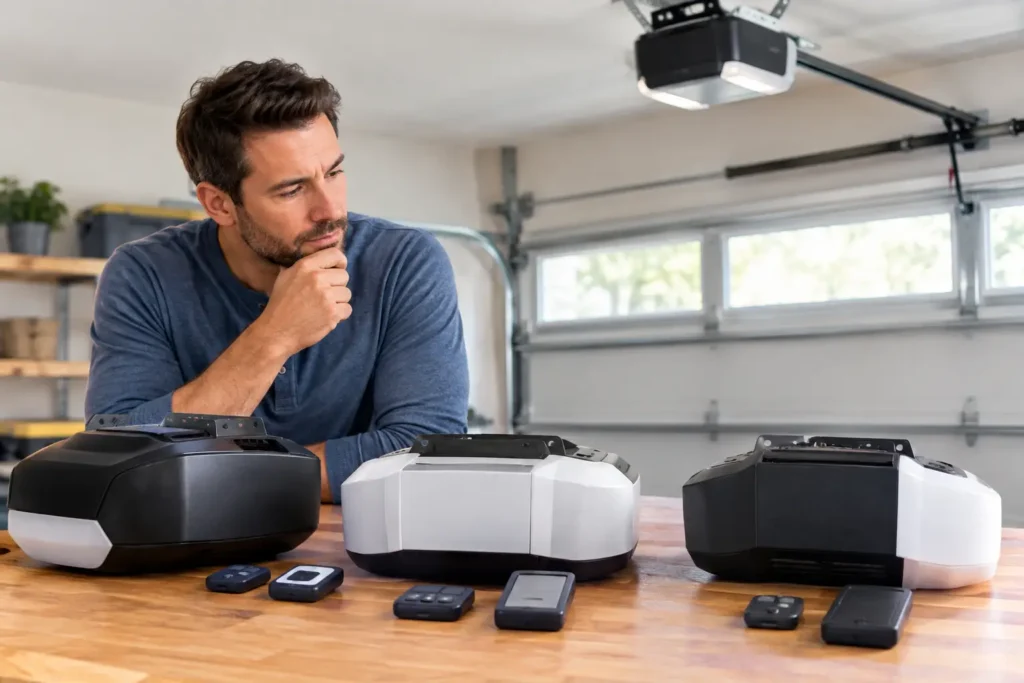
A garage door that will not open on a workday morning quickly turns a convenience into a problem. The right garage openers make daily access dependable, protect the door system from unnecessary strain, and provide the security features property owners expect. The wrong one may be loud, underpowered, poorly matched to the door, or difficult to service when it matters most.
For homeowners, farmers, contractors, and business owners, the best choice is rarely just the opener with the longest feature list. Door size and weight, how often it operates, available overhead space, noise concerns, and installation quality all affect the result. Choosing with those real conditions in mind can prevent repeat repairs and give the entire garage door system a longer working life.
Start With the Door, Not the Opener
An opener does not do the heavy lifting alone. Properly sized torsion or extension springs should counterbalance the garage door so it can be lifted manually with reasonable effort. If a door is unusually heavy, drops when released, binds in the tracks, or has damaged rollers, installing a more powerful opener will not solve the underlying issue. It can actually hide a door problem until it becomes more expensive to repair.
Before selecting an opener, consider the door’s width, height, construction, insulation, and condition. A standard single-car steel door has very different needs than an insulated double door, a tall RV bay door, or a sectional commercial door. Wood doors and doors with added insulation may weigh more than expected. Agricultural and commercial applications also tend to require equipment designed for more frequent cycles.
A good installation begins with checking the door balance, tracks, hinges, rollers, cables, springs, and mounting area. This is the practical difference between simply hanging an operator and setting up a system that works reliably.
Garage Openers: Choose the Right Drive Type
The drive type controls how the opener moves the door, and each option has a place. There is no one-size-fits-all answer.
Chain-drive openers
Chain-drive units use a metal chain to move the trolley along the rail. They are a proven, cost-conscious option and are often a strong fit for detached garages, workshops, barns, and locations where operating noise is not a major concern. Their straightforward design also makes them familiar to many service technicians.
The trade-off is sound. A chain-drive opener generally creates more vibration and noise than other styles, especially on an older door with worn rollers or loose hardware. If a garage sits below a bedroom or beside frequently used living space, many homeowners prefer a quieter alternative.
Belt-drive openers
Belt-drive openers use a reinforced belt rather than a chain. They are typically the quietest choice for residential garages attached to the home. The smoother operation can make a meaningful difference during early departures, late arrivals, or nap time.
Belt-drive models often cost more upfront, but the value can be worthwhile where noise matters. They remain a dependable option for many standard and insulated residential doors when properly sized and installed.
Screw-drive and direct-drive options
Screw-drive openers move the trolley along a threaded steel rod. They can provide strong, efficient operation, though performance may be affected by changing temperatures if maintenance is neglected. Direct-drive designs have fewer moving parts in the rail and can be notably quiet, but availability, service familiarity, and price vary by manufacturer and area.
These options can work well in the right setting, but it is wise to consider local service support and replacement-part availability before making a decision based solely on a feature sheet.
Wall-mount openers
Wall-mount, or jackshaft, openers are installed beside the garage door rather than above it. They can free up ceiling space for storage, lighting, car lifts, or tall vehicles. They are especially useful in garages with high ceilings, cathedral ceilings, or limited overhead clearance.
This setup requires the correct side clearance and a compatible torsion-spring system. It is not automatically the best answer for every door, but it can be an excellent solution where ceiling-mounted equipment would be inconvenient.
Match Power to Door Size and Daily Use
Power ratings can be confusing because manufacturers may use different terms, including horsepower, horsepower comparable, or DC motor ratings. Rather than choosing the biggest number available, match the opener to the actual door and usage level.
A properly balanced standard residential door often operates well with a quality mid-range opener. Larger insulated doors, wood doors, carriage-style doors, and doors used many times each day may benefit from a higher-capacity model. For commercial shops, storage facilities, agricultural buildings, and other high-cycle environments, a commercial-grade operator is generally the better investment.
The key point is simple: the opener should assist a healthy, balanced door. It should not be forced to compensate for broken springs, damaged tracks, or a door that is too heavy to operate correctly. Addressing those issues first protects the motor, gears, rail, and door hardware.
Features That Matter in Everyday Use
Smart controls are useful when they solve a real problem. Wi-Fi-enabled garage openers can allow owners to check door status, receive alerts, operate the door remotely, and grant access to family members or service providers. For a rental property, business, or busy household, that added visibility can provide genuine peace of mind.
Battery backup is another feature worth considering. During a power outage, a battery-equipped opener can keep the door operable without relying on manual release access. That can be particularly valuable when the garage is the primary entry point or when weather disrupts power in the area.
For homes with attached garages, motion-activated lighting and bright LED lighting can improve safety when carrying groceries, tools, or equipment. For properties with several users, keypad entry and vehicle-compatible remotes offer convenience without the need to distribute physical keys.
Security features should not be overlooked. Modern openers use rolling-code technology to help reduce the risk of remote-code theft. Vacation lock functions, automatic closing options, and app notifications can add another layer of control. Automatic closing should be used thoughtfully, however, particularly in homes with children, pets, or frequent deliveries.
Safety Equipment Is Not Optional
Every modern residential garage door opener should include photo-eye safety sensors near the bottom of the door tracks. These sensors prevent the door from closing when an object, person, or pet breaks the beam. The opener should also reverse when it encounters resistance during closing.
Sensors must be aligned, clean, and protected from damage. A bumped sensor bracket, dirty lens, loose wire, or direct sun interference can cause a door to refuse to close or reverse unexpectedly. These issues are common, but they should not be bypassed. Safety devices are there because a moving garage door can cause serious injury or property damage.
Test the reverse function regularly and keep the sensor area clear. If the door closes too forcefully, reverses for no obvious reason, or the cables and springs appear worn, schedule service rather than continuing to run it.
Professional Installation Protects the Investment
Some opener packages are marketed for do-it-yourself installation, and capable property owners may be comfortable with basic assembly. But an opener installation still requires correct rail alignment, solid mounting, sensor placement, limit setting, force adjustment, and integration with the door’s existing hardware. Springs and cables are under high tension and should be handled by trained technicians.
Professional installation is especially valuable for heavier doors, wall-mount systems, commercial operators, or doors that show signs of wear. It also creates an opportunity to identify issues before they cause an opener failure. Tri County Door & Builders helps property owners throughout Southwestern Pennsylvania select and install garage door systems based on the door, building, and daily demands rather than a generic recommendation.
Know When to Repair and When to Replace
A remote that stops working, a flashing sensor light, or a door that needs limit adjustment does not always mean the opener has failed. Many problems can be repaired at a reasonable cost. On the other hand, replacement often makes sense when an older unit lacks modern safety sensors, has recurring motor or gear failures, cannot support the door properly, or no longer has practical replacement parts available.
Routine care helps any opener last longer. Lubricate door rollers, hinges, and springs with products intended for garage doors, but do not coat the opener rail unless the manufacturer calls for it. Tighten loose hardware, replace worn rollers, keep sensors clean, and listen for new grinding, rattling, or popping sounds. Those small warning signs are often easier to address before the door stops working altogether.
The best garage opener is the one that fits the door, the building, and the way you use it. A quiet belt drive may be right for an attached garage, while a durable chain drive or commercial operator may make more sense for a busy shop or agricultural building. Taking time to match the equipment now can make every trip in and out of the garage simpler for years to come.