




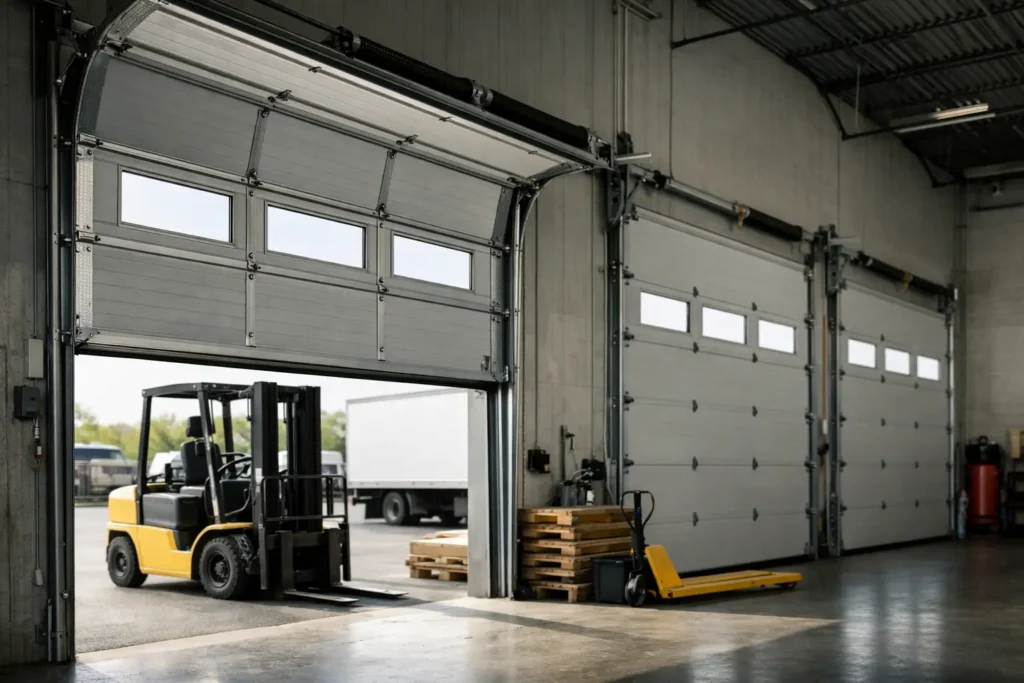
A commercial door that sticks on a cold morning, leaves a gap at the floor, or takes too long to open is more than an inconvenience. It can slow deliveries, expose valuable equipment, frustrate employees, and create a safety concern. The right commercial garage doors are selected for the work happening behind them – not simply for the size of the opening.
For shops, warehouses, farm operations, municipal buildings, and service businesses across Southwestern Pennsylvania, a door needs to handle changing weather, regular use, and the realities of a busy property. Choosing well at the start can reduce repairs, energy loss, and interruptions for years to come.
Start With How the Door Will Be Used
The first question is not, “What door looks best?” It is, “What does this opening need to do every day?” A door on a heated repair shop has different demands than one on a cold-storage building, a fire station, an agricultural structure, or a warehouse loading area.
Think through how often the door will cycle, what vehicles need clearance, whether people regularly walk through the opening, and whether the building is heated. A door used a few times each day may perform well with standard commercial components. A door opening dozens of times per shift needs a heavier-duty spring system, dependable operator, and hardware designed for frequent cycles.
Also consider what happens if the door is down unexpectedly. For a business that cannot receive shipments or move service vehicles, speed and reliability carry more weight than a lower upfront price. That does not mean every property needs the most expensive setup. It means the equipment should match the cost of downtime.
Types of Commercial Garage Doors to Consider
Sectional steel doors are a common choice because they are versatile, durable, and available in insulated and non-insulated models. They work well for auto shops, warehouses, maintenance garages, and many agricultural or light-commercial buildings. Steel construction stands up to daily use, and damaged sections can often be addressed without replacing the entire door.
Rolling steel doors are built for applications where security and compact storage above the opening matter. They roll into a coil rather than travel on horizontal tracks across the ceiling. That can be useful where overhead space is limited or where a business needs a strong security barrier for a service counter, storage room, or commercial bay.
Aluminum full-view doors are often selected when natural light and visibility matter. Restaurants, showrooms, equipment facilities, and modern mixed-use spaces may benefit from their clean appearance and glass-panel options. The trade-off is that glass choices, insulation needs, and privacy should be carefully considered before installation.
High-speed doors are designed for facilities where traffic flow and climate separation are major priorities. They are not necessary for every building, but they can make sense in active loading areas or operations with repeated forklift and vehicle movement. Their higher initial cost should be weighed against productivity, reduced air loss, and the need for specialized service.
Insulation Is About More Than Comfort
In Western Pennsylvania, an insulated door can make a noticeable difference in a heated shop or work area. It helps limit heat transfer through one of the building’s largest moving surfaces, supports more consistent indoor temperatures, and can reduce condensation concerns in certain settings.
Insulation is especially worth considering when employees work near the door, inventory is temperature-sensitive, or the building has a heated office attached to the garage area. A door with insulated steel sections and quality perimeter seals generally offers better performance than a basic non-insulated model.
Still, insulation is not automatically the best investment for every opening. If an unheated storage building is opened only occasionally, a non-insulated commercial door may be the practical choice. The goal is to spend where the building will actually benefit.
Do Not Overlook Weather Seals
Even a well-built door can underperform if its bottom seal, side seals, or top seal are worn or improperly fitted. Gaps allow cold air, wind-driven rain, dust, and pests into the building. They also make heating systems work harder.
The floor matters, too. A sloped or uneven concrete apron can prevent the bottom seal from making proper contact. Addressing the condition of the opening before installation is often less expensive than trying to solve a recurring weather issue afterward.
Size, Clearance, and Site Conditions Matter
Commercial openings are not always as straightforward as they appear. Measure the clear width and height needed for the largest vehicle or equipment, then account for tracks, headroom, side room, and the path of the door when open. A door that technically fits the opening may still be a poor fit for the building’s ceiling layout, lighting, sprinkler systems, or overhead utilities.
Low-headroom track systems and specialized lift options can solve many space limitations, but they should be planned before ordering. This is one reason an on-site assessment is valuable. It helps identify obstacles that are easy to miss from a rough measurement or a photo.
For larger doors, wind exposure and structural conditions also deserve attention. Buildings on open ground, hilltops, or wide agricultural properties can see stronger wind loads than a sheltered commercial site. The door, track system, attachment points, and surrounding framing all need to work together.
Choose an Operator That Fits the Workload
A commercial operator should be selected alongside the door, not added as an afterthought. The operator needs enough lifting capacity for the door’s size and weight, but capacity alone is not the full story. Cycle rating, control options, safety devices, and access needs all influence the right choice.
A light-duty operator may be suitable for a small business bay used a few times a day. A high-cycle operator is a better fit for a busy shop, fleet facility, or warehouse door that opens continually. Purchasing an undersized operator can lead to early wear, avoidable service calls, and frustrating delays.
Safety features should also match the activity around the opening. Photo eyes, sensing edges, warning devices, and properly placed controls help protect employees, customers, vehicles, and equipment. If the door is used after hours, keypad entry, remote controls, or monitored access options may be worth considering.
Plan for Service Before There Is a Problem
Commercial doors have moving parts under significant tension. Springs, cables, rollers, bearings, hinges, tracks, and operators wear over time, particularly on high-use doors. Waiting until the door fails can turn a manageable repair into a business interruption.
A practical maintenance routine should include these checks:
- Inspect the door, tracks, rollers, cables, and hardware for visible wear or damage.
- Test the operator’s safety reversal and photo-eye functions regularly.
- Keep tracks clear of debris and avoid using damaged rollers or bent hardware.
- Watch for new noises, uneven movement, slow operation, or a door that will not close evenly.
- Schedule professional service for spring, cable, operator, and alignment concerns.
Do not attempt to adjust commercial springs or cables without proper training and tools. These components carry heavy tension and can cause serious injury when handled incorrectly.
Work With a Supplier Who Understands the Whole Building
A commercial garage door affects security, building performance, daily operations, and long-term maintenance. The best decision usually comes from looking at the entire opening and how the property functions, rather than choosing the lowest-price door on a spec sheet.
Tri County Door & Builders helps property owners, contractors, and businesses make practical choices based on building use, budget, and local conditions. From selecting the right door and operator to installation and repair support, experienced local service makes it easier to keep a working building working.
A well-matched door should disappear into the routine of the day: it opens when it should, closes securely, protects the space behind it, and lets your team get on with the work that matters.