




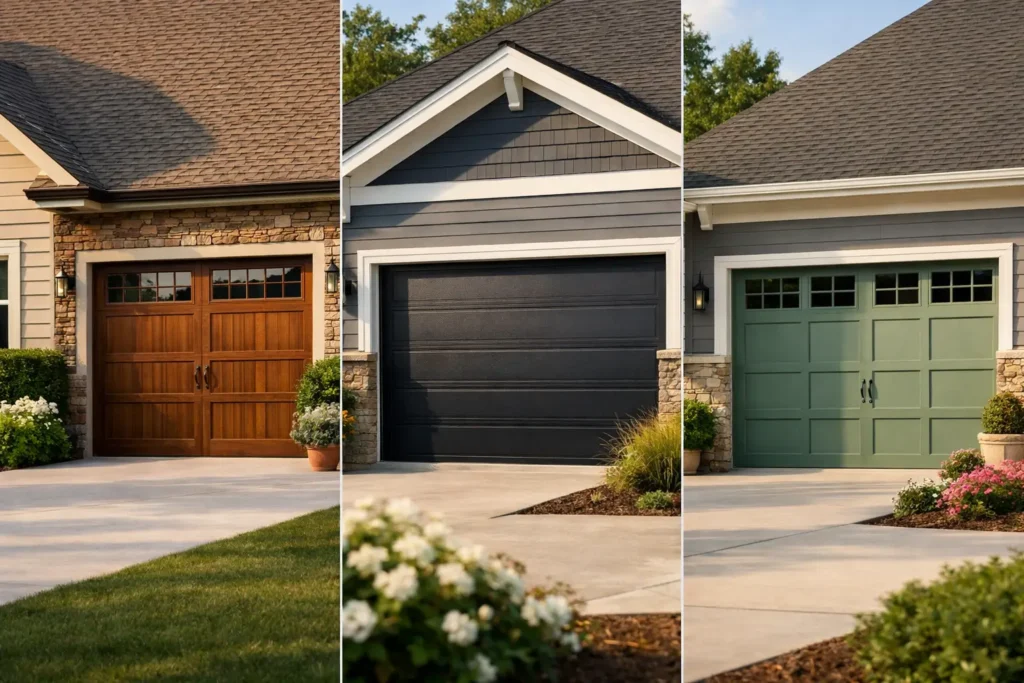
A garage door can take up a third or more of a home’s front-facing exterior. That is why garage door color trends are worth more attention than a quick paint-chip decision. The right color can make an older home look more current, help a pole building feel intentional on the property, or give a commercial building a clean, professional appearance. The wrong choice can make the door stand out for all the wrong reasons.
For property owners in Southwestern Pennsylvania, color should not be chosen on style alone. Our weather, road dust, tree cover, roof color, exterior materials, and long-term maintenance all matter. A good garage door color works with the building today and still looks right years from now.
Garage Door Color Trends Moving Beyond Basic White
White garage doors remain common for a reason: they are clean, versatile, and usually pair easily with light vinyl siding, brick, and traditional trim. But more homeowners and builders are using garage door color as a deliberate part of the exterior design. The strongest trend is not one single shade. It is a move toward colors that coordinate with the whole property rather than disappearing into it.
Deep neutrals lead the way. Charcoal, black, bronze, dark brown, and warm gray doors are popular because they add contrast without looking overly decorative. They work especially well on homes with lighter siding, stone accents, black window frames, or darker roofing. A dark door can make a simple ranch, farmhouse, or updated colonial look more grounded.
Natural-looking finishes are also in demand. Wood-grain garage doors offer the warmth of stained wood with the durability and lower upkeep of steel construction. Walnut, cedar, mahogany, and medium oak appearances can complement timber details, stone veneers, rustic pole buildings, and modern farmhouse exteriors. This is a practical option for owners who want the look of wood but do not want the regular refinishing that real wood often requires.
On the other end of the spectrum, warm light neutrals are replacing stark, bright white in many projects. Cream, almond, sandstone, taupe, and soft greige can blend smoothly with beige siding, tan brick, brown roofs, and earth-tone metal. These shades are less likely to feel harsh in direct sunlight and tend to hide ordinary dust better than pure white.
Match the Door to the Building, Not Just the Sample
A color chip in a showroom or on a phone screen cannot show how a full garage door will look next to your siding and roof. Before choosing, look at the building from the street and identify its dominant colors. The roof is usually the best starting point because it is a long-term exterior element that is expensive to change.
If the roof is black, charcoal, or weathered gray, a black, dark gray, or medium gray garage door can create a coordinated look. A door that is slightly lighter than the roof often provides definition without making the front elevation feel too dark. With brown roofing, bronze, dark brown, almond, sandstone, and wood-grain doors are often safer choices than cool blue-gray finishes.
Brick requires a closer look. Red brick usually pairs well with warm colors such as brown, bronze, black, cream, or deep green. Gray or white brick can handle cooler charcoal tones, black, or a muted wood grain. If the brick has several colors, choose a door color that picks up one of the quieter background tones rather than trying to match the most noticeable fleck.
For metal buildings, pole barns, workshops, and agricultural structures, coordination matters just as much. Matching the garage door to the wall panels creates a clean, low-contrast appearance. Choosing a door that matches the trim gives the opening more definition. Neither approach is automatically better. Matching the walls is often best for a large building where the door should blend in, while matching the trim can help a smaller shop or attached garage look more finished.
Dark Colors: Sharp Appearance, Real Trade-Offs
Black and charcoal doors are among the most requested choices, and they can look excellent. They frame the garage opening, complement dark roofs, and work well with contemporary details. However, dark colors show pollen, dust, salt residue, and scratches more readily than mid-tone finishes. They also absorb more heat in full sun.
That does not mean a dark door is a bad choice. It simply means location matters. A garage facing north or shaded by trees may be a great fit for black or dark charcoal. A wide, south-facing door that receives strong afternoon sun may benefit from a lighter color or a well-insulated door. Insulation is particularly worthwhile when the garage is attached to the house, used as a workspace, or located below finished living space.
Wood Grain: Character Without a High-Maintenance Finish
Wood-look doors continue to be a strong choice for homeowners who want more character than a solid painted finish provides. They can soften the appearance of steel siding, connect a garage to exposed beams or a front porch, and add warmth to a home with gray or black exterior colors.
The key is scale. A dark wood grain on a one-car detached garage can be a striking accent. On a three-car front-facing garage, a very dark or heavily patterned wood look may become the main visual feature of the home. If that is not the goal, consider a medium wood tone or use windows and panel design to break up the larger surface.
Choose a Color That Holds Up Between Cleanings
In western Pennsylvania, garage doors deal with more than rain. Winter road treatment, muddy driveways, pollen, falling leaves, and changing temperatures all affect how a finish looks over time. Mid-tone colors usually offer the best balance between style and practical upkeep.
Warm gray, taupe, bronze, and medium brown are dependable choices for busy households, rural properties, and commercial buildings. They hide ordinary grime better than white while showing less dust and scuffing than black. A textured steel finish can also be more forgiving than a very smooth, glossy surface.
Pay attention to the color of the hardware, windows, and exterior lights as well. Black decorative hardware can look sharp on a light or medium-tone carriage-house door. On a black door, the same hardware may disappear, which can be exactly the clean, simple look you want. Window frames should coordinate with the door and the home’s existing trim rather than introducing a third unrelated color.
The Best Color Depends on Your Property Type
A residential garage door is usually part of the home’s curb appeal, so it should relate to siding, trim, shutters, entry doors, and roofing. A commercial overhead door has a different job. It should look professional, coordinate with the building, and remain practical when it is exposed to frequent use, loading areas, or roadway dirt.
For a farmhouse, barndominium, or rural property, earthy colors and wood-grain finishes often suit the setting better than high-contrast modern shades. For a newer suburban home, black, charcoal, or a balanced gray can provide a current look, especially when repeated in window frames or exterior lighting. For a retail, warehouse, or service building, neutral doors that match the wall panels or trim are usually the best long-term investment.
There is also value in considering resale. A bold red, blue, or green door can be attractive on the right property, but it narrows the audience if the building may be sold soon. Neutral colors are easier for future owners to live with and usually offer broader appeal.
Before You Commit, Check These Details
Ask to see actual samples outdoors beside the building whenever possible. Morning shade, cloudy weather, and late-afternoon sun can make the same color look surprisingly different. If the garage door is being replaced as part of a larger exterior project, finalize roofing, siding, and trim colors first. Selecting the door last is usually easier than trying to make every other material work around it.
Also consider the door style. A contemporary flush-panel door often looks best in black, charcoal, gray, or a clean wood grain. Raised-panel doors are flexible and can suit white, almond, sandstone, or darker neutrals. Carriage-house doors can carry more visual detail, so a color with some warmth often keeps them from feeling too formal.
A garage door should make the building look cared for, not chase a short-lived trend. The best choice is one that fits the property, handles daily life, and still feels right after the next few Pennsylvania winters. For help comparing door styles, insulation options, and finishes for a home, farm, or business, Tri County Door & Builders can provide straightforward local guidance before the order is placed.