




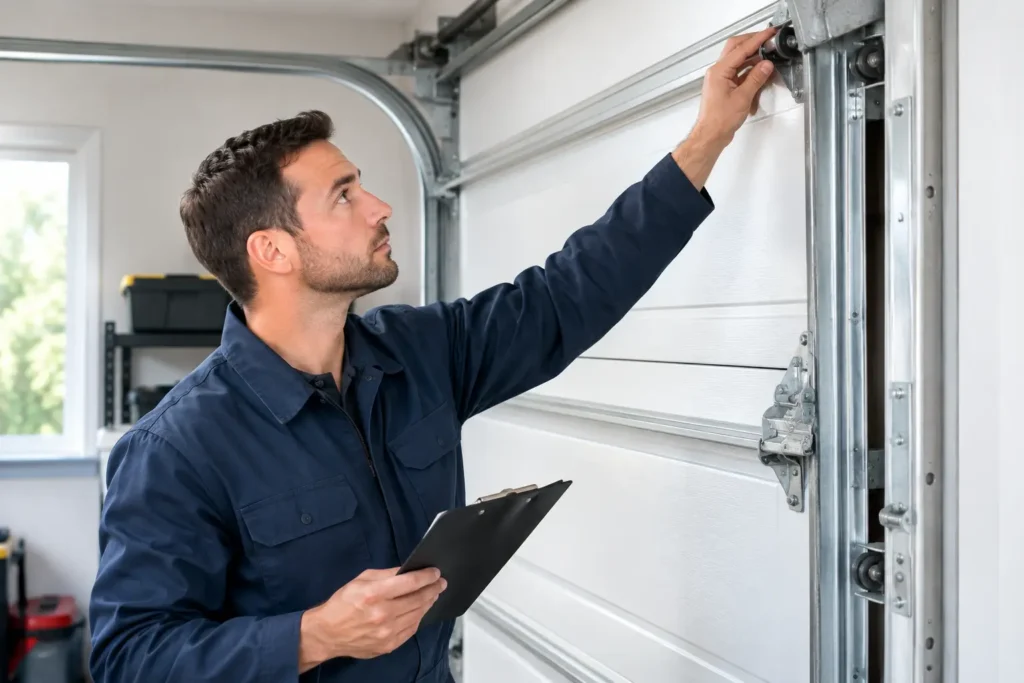
A garage door may be the largest moving object in your home or business, and it is used often enough that problems can become easy to ignore. Garage door safety comes down to paying attention before a small issue becomes a damaged vehicle, a trapped person, or a door that will not secure the building when you need it to.
For homeowners, farms, shops, and commercial properties, the goal is not to turn every owner into a repair technician. It is to know what normal operation looks and sounds like, use the door responsibly, and call for service when a component is no longer doing its job safely.
Why garage door safety deserves regular attention
A properly working garage door should open smoothly, close fully, and reverse when something is in its path. If it shakes, bangs, moves unevenly, or needs repeated attempts to operate, the issue is more than an inconvenience. Springs, cables, rollers, tracks, and openers work as a system. When one part wears down, the strain often shifts to other parts.
This matters especially in Southwestern Pennsylvania, where changing temperatures, winter moisture, road salt, and wind can add wear to doors and hardware. A little preventive attention is usually less expensive and far less disruptive than an emergency repair after a door comes off track or fails to close.
10 garage door safety checks for property owners
1. Watch one full open-and-close cycle
Stand clear and watch the door operate from start to finish. It should move at a steady pace without jerking, rubbing, or stopping unexpectedly. Listen for grinding, squealing, popping, or a sudden change in motor noise.
A noisy door does not always mean a major failure. It may need lubrication or an adjustment. Still, new noises are worth addressing early, particularly when the door is heavy or used several times a day.
2. Test the automatic reversal feature
Most modern openers have a safety reversal system. With the door fully open, place a solid object such as a piece of lumber flat on the floor where the door closes. Activate the opener. When the door contacts the object, it should reverse promptly.
If it continues pressing down, stop using the automatic opener until a qualified technician can inspect it. Do not increase the opener’s closing force to make an unreliable door shut. That adjustment can create a serious safety risk.
3. Keep the photo-eye sensors clean and aligned
The photo-eye sensors are mounted near the bottom of the tracks, usually a few inches above the floor. They send an invisible beam across the doorway. If the beam is blocked, the opener should not close the door.
Check that the sensors are clean, securely mounted, and facing one another. Dirt, cobwebs, mulch, snow, and an accidental bump can interfere with alignment. If the door starts down and immediately reverses, or the opener lights flash, the sensors are a likely place to start. Clean them with a soft cloth and remove obstructions, but avoid bending brackets or forcing a damaged sensor into position.
4. Look at the springs and cables without touching them
Springs and cables carry tremendous tension. A broken spring can leave a door too heavy for the opener to lift, while a frayed or loose cable can contribute to an uneven door or a door coming off its track.
Look for visible gaps in torsion springs, stretched extension springs, frayed cable strands, loose hardware, or a door hanging lower on one side. Do not attempt to adjust, wind, unwind, or remove springs and cables yourself. This is work for a trained garage door professional with the right tools and experience.
5. Check rollers, hinges, tracks, and fasteners
With the door closed, inspect the rollers and hinges for cracking, severe wear, or loose bolts. Tracks should be clear of debris and appear firmly attached to the wall and ceiling. A light wipe-down can remove dust and grit that build up over time.
Do not apply heavy grease to the tracks. It can collect dirt and make operation worse. Garage door-rated lubricant used sparingly on moving metal parts is generally more useful, but follow the door and opener manufacturer’s recommendations. If a track is bent or the door is rubbing against it, schedule service rather than trying to hammer it straight.
6. Make sure the manual release is understood
Every automatic garage door should have a manual release cord, usually marked with a red handle. This release is helpful during a power outage, but it must be used correctly. Before pulling it, make sure the door is fully closed whenever possible. Releasing a door with a broken spring or other balance problem can allow the door to fall quickly.
Adults in the household or staff responsible for the building should know where the release is and how to reconnect the opener afterward. If you are unsure, ask your installer or service technician to demonstrate it during a maintenance visit.
7. Keep controls away from children
Wall buttons, remotes, and keypad codes are conveniences, not toys. Teach children that they should never play under a moving garage door, race it while it closes, hang from its sections, or use the remote without adult permission.
Mount wall controls at least five feet above the floor and where the door is visible from the button. Replace or relocate loose remotes that children can easily access. For business and agricultural settings, make sure employees understand that a moving overhead door is not a shortcut to walk or drive beneath.
8. Do not leave a moving door unattended
Wait until the door has closed completely before driving away or moving on to another task. This simple habit helps you catch a door that reverses, stops short of the floor, or leaves a gap large enough for weather, pests, or unauthorized entry.
If you use a keypad, protect the code. Change it after a tenant change, employee departure, lost remote, or any situation where access may no longer be controlled. Security and safety often overlap at the garage door.
9. Check the door’s balance carefully
An unbalanced door puts extra strain on the opener and can signal spring trouble. With the door closed, disconnect the opener using the manual release only if the door appears to be in good condition. Lift the door by hand to about halfway and let go carefully. A balanced door should stay near that position.
If it rapidly falls, shoots upward, or is extremely difficult to lift, reconnect the opener and call for service. Do not keep operating a poorly balanced door with the opener. The opener is designed to guide the door, not carry the full weight of it.
10. Schedule professional service before failure
A visual inspection and simple monthly checks are useful, but they do not replace professional maintenance. A technician can inspect spring tension, cable condition, opener settings, track alignment, mounting hardware, and the parts you cannot safely evaluate on your own.
Annual service is a sensible baseline for most residential doors. Doors serving busy workshops, commercial buildings, farm facilities, or multi-vehicle households may need more frequent attention because cycles add up quickly. The right interval depends on usage, door size, exposure to weather, and the condition of existing components.
When to stop using the garage door
Some problems call for immediate caution rather than another attempt at opening or closing the door. Stop using the door and arrange service if you see a broken spring, a loose cable, a bent track, a door that has come off track, or a door that closes with excessive force. The same applies if the opener hums but the door will not move, or if the door is visibly crooked.
If the door is stuck open, keep people and vehicles away from the opening and secure the area as best you can until help arrives. Avoid placing ladders, boards, or improvised supports beneath a suspended door. Those temporary fixes can shift without warning.
A safer door starts with prompt, practical care
Reliable garage doors do not need constant attention, but they do need timely attention. A clean sensor, a clear doorway, and a quick monthly test can prevent many common problems. When the issue involves springs, cables, balance, tracks, or an opener that is acting unpredictably, professional service is the safer choice.
Tri County Door & Builders helps property owners across Westmoreland, Somerset, and Fayette counties make practical decisions about garage door repair, replacement, and installation. If your door is showing warning signs, addressing them now can help protect the people and property that depend on it every day.