




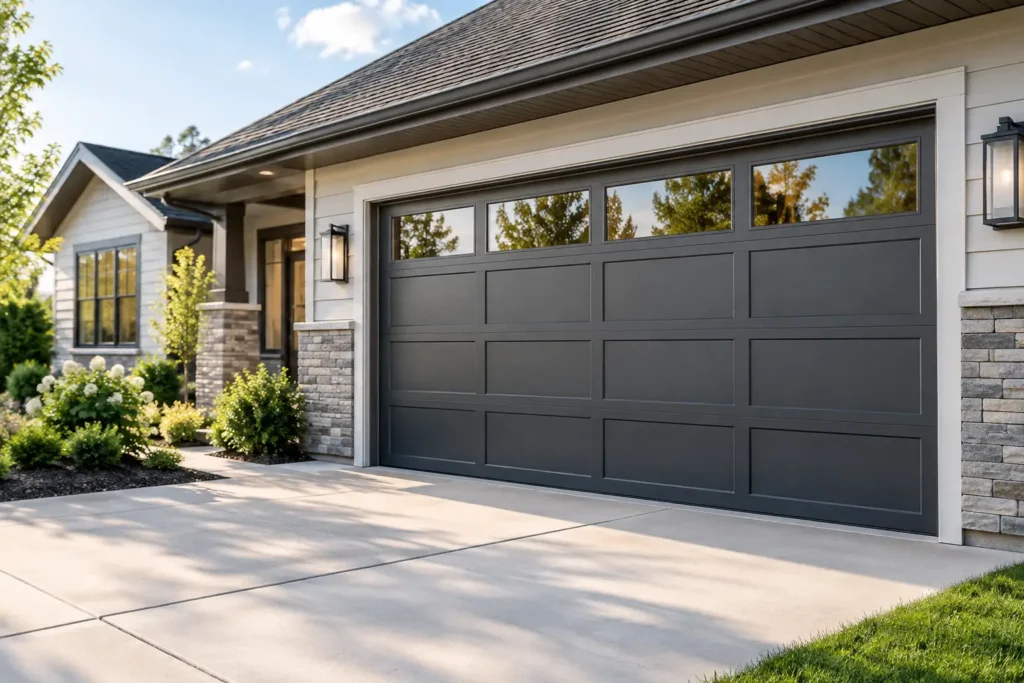
A garage door can be the largest moving part of a home, and it often gets used more than the front door. When garage doors become noisy, hard to operate, drafty, or unreliable, the issue affects more than convenience. It can impact security, energy costs, stored equipment, and the appearance of the property.
Choosing the right door is not simply a matter of picking a color or finding the lowest price. The right choice depends on how the garage is used, the local weather, the opening size, and whether insulation or low-maintenance materials will pay off over time. A well-chosen door, installed correctly and maintained regularly, can provide dependable service for years.
Start With How You Use the Garage
Before comparing styles, consider what happens inside the garage every day. A detached storage garage has different needs than an attached garage beside a living room, workshop, or finished space. If the garage holds vehicles only occasionally, a basic non-insulated steel door may be a sensible value. If it serves as a workshop, utility area, or entryway used every day, comfort and durability should carry more weight.
For attached garages, insulation is often worth serious consideration. It helps reduce heat transfer between the garage and the home, and it can make the space more comfortable during Southwestern Pennsylvania’s cold winters and humid summers. Insulation will not turn an unconditioned garage into a finished room, but it can reduce temperature swings and outside noise.
Homeowners should also think about daily traffic. A door that opens several times a day needs a reliable spring system, quality rollers, properly sized tracks, and an opener designed for the workload. Saving on these functional components can lead to frustrating repairs much sooner than expected.
Garage Door Materials Have Different Strengths
Steel remains one of the most practical choices for many properties. It is durable, widely available, and offered in styles ranging from simple raised panels to carriage-house designs. Steel doors can be insulated or non-insulated, and modern finishes provide a broad range of colors and wood-grain appearances without the regular upkeep of natural wood.
Aluminum and glass doors offer a clean, contemporary look and can bring natural light into a garage or commercial space. They are especially appealing for showrooms, modern homes, and service areas where visibility matters. The trade-off is that glass requires cleaning, and aluminum may be more prone to dents than heavier steel.
Wood doors provide warmth and character that is difficult to duplicate. They can be an excellent fit for certain architectural styles, but they require more maintenance. Moisture, sun exposure, and temperature changes can affect wood over time, so buyers should plan for periodic refinishing and upkeep.
Vinyl and composite options can be useful where moisture resistance and low maintenance are priorities. Like any material, however, they should be evaluated for their construction quality, insulation level, and ability to handle the size and use of the opening. The best material is the one that matches the building, budget, and expected service life.
Insulation Is More Than an R-Value
Garage door insulation is commonly discussed in terms of R-value, which measures resistance to heat flow. A higher R-value generally provides better insulation, but it should not be the only deciding factor. Door construction, weather seals, panel thickness, and installation quality all affect real-world performance.
A basic single-layer door has no insulation. A double-layer door typically adds insulation behind the steel face. A triple-layer door usually includes steel inside and out with insulation in the center, creating a sturdier, quieter option. For an attached garage or a building exposed to frequent wind and weather, that added structure can be a practical long-term investment.
Choose a Style That Works With the Property
A garage door takes up substantial visual space, so its design can either support the building’s appearance or distract from it. Traditional raised-panel doors work well with many homes. Carriage-house doors add detail and character without requiring the operation of old-fashioned swing doors. Flush-panel and full-view designs suit more contemporary buildings.
Color matters, but durability matters more. A finish should complement the siding, trim, brick, stone, or metal exterior while remaining easy to maintain. Dark colors can look sharp, though they may show dust and surface wear more readily. Window placement should also be considered carefully. Windows add light and curb appeal, but they need to fit the door design and the privacy needs of the space.
For pole buildings, farm structures, and commercial garages, appearance still matters, but function usually leads the decision. Door height, width, clearance, wind exposure, equipment access, and frequency of use are often more important than decorative details. Measuring the opening and the available headroom correctly is essential before ordering.
Do Not Overlook Springs, Openers, and Safety Features
The door itself is only part of the system. Springs carry the door’s weight, cables guide that force, tracks keep movement aligned, and the opener provides controlled operation. When one component is mismatched or worn out, the entire system can become unsafe or unreliable.
Torsion springs are mounted above the door opening and are common on many residential and commercial applications. Extension springs run alongside the horizontal tracks. Both are under significant tension and should be adjusted or replaced by trained technicians. A broken spring may make a door impossible to lift and can place extra strain on the opener if someone attempts to operate it anyway.
Modern openers should include photo-eye safety sensors that stop or reverse the door when an object crosses the opening. Battery backup can be valuable during power outages, particularly for homes where the garage is a primary entry point. Smart controls can offer useful alerts and remote access, but they should be viewed as an added convenience, not a substitute for a properly installed and balanced door.
Installation Quality Protects Your Investment
Even a high-quality door can perform poorly if it is installed incorrectly. Tracks must be level and secure, springs must be calibrated to the door’s weight, and the door should seal evenly against the opening. An improperly balanced door can wear out rollers, cables, and openers faster while creating unnecessary safety risks.
Professional installation is especially valuable for oversized doors, insulated doors, custom openings, commercial applications, and replacements where framing or clearance issues may be present. A knowledgeable local supplier can help confirm measurements, explain available options, and identify concerns before materials are ordered.
Tri County Door & Builders helps property owners across the region match garage door products and installation needs to the way their buildings are actually used. That practical guidance matters when a door must perform through changing weather, daily vehicle traffic, or the demands of a working farm or business.
Simple Maintenance Helps Garage Doors Last
Most garage door problems begin with small signs that are easy to ignore: a new squeak, a jerky movement, a loose weather seal, or an opener that sounds louder than usual. A few routine checks can help identify trouble before it becomes an urgent repair.
At least twice a year, look over the rollers, hinges, cables, tracks, and weather stripping. Test the photo-eye sensors and the opener’s reversing feature. Keep tracks clear of debris, but do not apply heavy grease inside them. Lubricate moving metal components with an appropriate garage door lubricant, following the product instructions.
A door should also stay balanced. With the opener disconnected, a properly balanced door should remain near the halfway point when lifted manually. If it drops quickly, rises on its own, or feels unusually heavy, stop using it and arrange for service. Springs and cables are not a safe do-it-yourself repair.
Know When Repair Makes Sense and When Replacement Is Better
Repair is often the right answer for worn rollers, damaged seals, misaligned sensors, broken springs, and many opener issues. If the panels are in good shape and the door fits the building well, a targeted repair can restore reliable operation at a reasonable cost.
Replacement may be the better value when a door has extensive rust, repeated panel damage, poor insulation, outdated safety features, or recurring mechanical problems. Replacing an older door can also be an opportunity to improve curb appeal, quiet operation, and energy performance. The best decision depends on the condition of the existing system and the cost of solving the underlying problem, not just getting it to open one more time.
A garage door should make daily life easier, not become another property concern waiting to happen. Choose for the way you use the space, invest in correct installation, and address small problems early. That approach gives you a door that looks right, works safely, and earns its place on the building every day.