




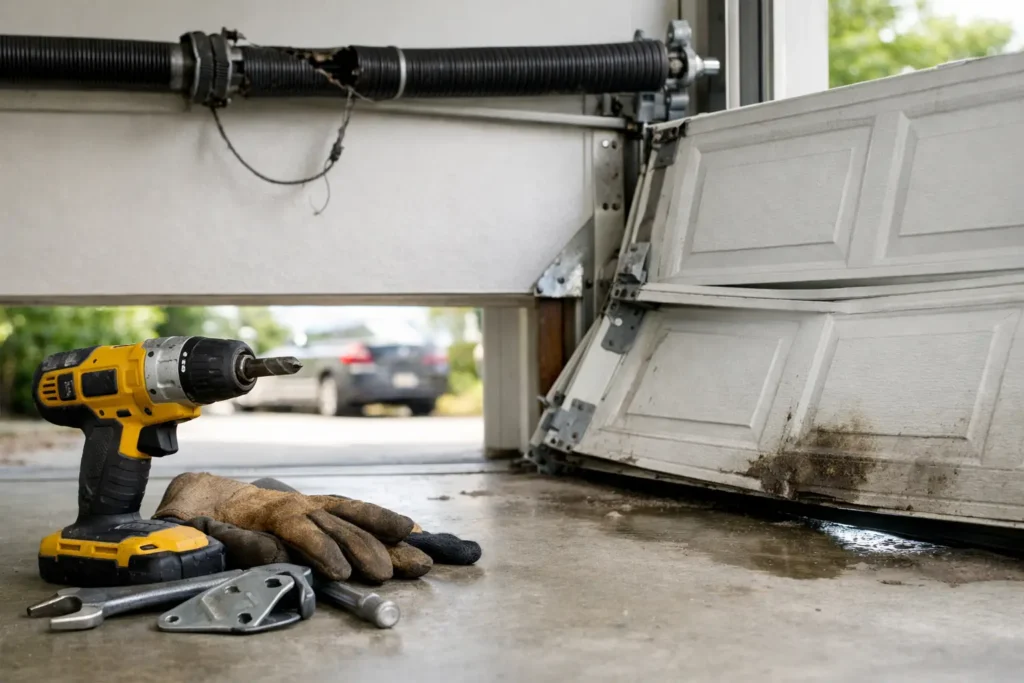
A garage door that hesitates, bangs, or will not close is more than an everyday annoyance. It can leave vehicles and equipment exposed, interrupt a business day, and create a serious safety risk. Timely garage repair helps protect one of the largest moving systems on your property before a small problem becomes a damaged door, a failed opener, or an emergency call.
For homeowners, farms, contractors, and commercial property owners in Southwestern Pennsylvania, the right response depends on what failed, the age of the system, and whether the door can still operate safely. Some issues are simple adjustments. Others involve high-tension components that should only be handled by a qualified technician.
The garage repair issues that need attention now
Garage doors give warnings before they stop working altogether. A door may begin moving unevenly, reverse without an obstruction, or make sounds it never made before. Ignoring those changes can put extra stress on the opener, tracks, rollers, and springs.
A door that will not stay open, slams shut, or feels unusually heavy is a priority. These symptoms often point to a broken spring, damaged cable, or balance problem. Garage door springs store significant energy, and attempting to replace or adjust them without the proper tools and training can cause severe injury.
A door that comes off its track also needs professional attention before anyone tries to operate it again. Pushing the opener button repeatedly can twist panels, bend hardware, and turn a repairable issue into a replacement project. Disconnecting the opener and keeping the area clear is the safer choice until the door can be inspected.
Water entering around the bottom or sides of the door deserves a closer look, especially after heavy rain or winter freeze-thaw cycles. Worn bottom seals, damaged weatherstripping, poor track alignment, and bent panels can all allow moisture, leaves, and pests into the garage. For attached garages, that gap can also affect comfort and energy use inside the home.
Common garage door problems and what causes them
Not every malfunction has the same remedy. A reliable diagnosis starts with the door itself, then looks at the parts that support and operate it.
The door is noisy or jerky
Grinding, squealing, rattling, or popping can come from worn rollers, loose hinges, dry moving parts, or track issues. In some cases, the door may simply need routine service and lubrication with a garage-door-approved product. In others, a bent track or failing roller can cause the door to bind and place added strain on the opener.
Noise alone does not always mean the door is unsafe, but it is a useful early warning. Addressing it promptly is often less expensive than waiting for a roller to break or a track to become badly damaged.
The remote works inconsistently
If the wall button works but the remote does not, start with the battery and make sure the opener’s safety sensors are not causing a closing issue. Signal interference, programming problems, and a worn remote can also be factors. When neither the remote nor wall control operates consistently, the opener may need electrical troubleshooting or replacement.
An opener is designed to move a properly balanced door, not force a heavy or damaged door through its travel. Replacing an opener without correcting a spring, cable, or track problem can shorten the life of the new unit.
The door reverses before closing
Modern openers use photo-eye safety sensors near the bottom of the tracks. Dirt on the lenses, misalignment, loose wiring, or an object in the opening can prevent the door from closing. Clean the lenses carefully and check that nothing is blocking the doorway.
If the sensors appear clear and aligned but the problem continues, do not bypass the safety system. A technician can determine whether the issue is with the sensors, wiring, opener settings, or the door’s movement.
The door has damaged panels
A dented section may be cosmetic, or it may affect how the door travels. The difference matters. Minor dents in a steel panel can sometimes be left alone if the door remains properly aligned and sealed. Cracked, creased, rusted, or severely bent sections may weaken the whole door and make panel replacement or full replacement the better investment.
Matching a replacement panel can be difficult for older doors, discontinued colors, or specialty commercial systems. That is one reason to assess the door as a whole rather than making a decision based on appearance alone.
When garage repair makes financial sense
Repair is usually the practical choice when the door is structurally sound and the problem is isolated. Replacing worn rollers, cables, weather seals, hinges, sensors, or a single damaged component can extend the useful life of a quality garage door. The same is true for a failed opener when the door itself is balanced, stable, and in good condition.
Replacement becomes more compelling when multiple major parts are failing, panels are extensively damaged, or the door no longer seals or operates reliably. An older uninsulated door may also be worth replacing if the garage is used as a workshop, storage area, or buffer between outdoor weather and the home.
There is a trade-off. Repairing an older door may cost less today, but repeated service calls can add up if springs, rollers, hardware, and panels are all nearing the end of their service life. A new door costs more upfront, yet it can provide better insulation, updated safety features, improved curb appeal, and a fresh warranty. The best choice is based on the condition of the entire system, not just the part that failed first.
What property owners can safely check
A few basic observations can help you explain the problem clearly when scheduling service. With the door closed, look for obvious damage to panels, tracks, rollers, and weather seals. Check whether the photo-eye sensors are clean and facing one another. Listen for new noises and note whether the door stops at the same point each time.
You can also check for items blocking the opening and replace a remote battery if needed. Beyond that, caution is warranted. Do not loosen brackets connected to cables, attempt to wind or replace springs, force a crooked door into place, or work beneath an open door that will not stay up.
For manually operated doors, a balance test should be performed only when the system appears intact and you understand how to safely disengage the opener. A properly balanced door should not feel excessively heavy or race upward. If it does, stop and arrange service. The door is telling you that its counterbalance system needs attention.
Preventive care protects the door and the budget
Garage doors work through heat, rain, snow, road dust, and frequent daily use. A seasonal inspection can catch small problems before they interrupt access to your garage or business. Keep tracks free of debris, inspect weather seals for cracks, and listen for changes in operation. Avoid applying heavy grease to tracks, which can attract dirt and interfere with smooth movement.
Professional maintenance adds another layer of protection. A service visit can identify loose hardware, worn rollers, weak springs, opener settings, and safety-sensor concerns before they result in a breakdown. This is especially useful for larger commercial doors, agricultural buildings, and high-use residential garages where downtime has a real cost.
Tri County Door & Builders helps property owners throughout Westmoreland, Somerset, and Fayette Counties make practical decisions about garage door repair, replacement, and installation. The goal is not to push a one-size-fits-all answer. It is to identify the cause, explain the options clearly, and restore dependable operation with a solution that fits the property and budget.
If your garage door is making new noises, moving unevenly, or no longer closing safely, do not wait for it to fail at the worst possible time. A prompt inspection can protect your door, your property, and the people who use it every day.