




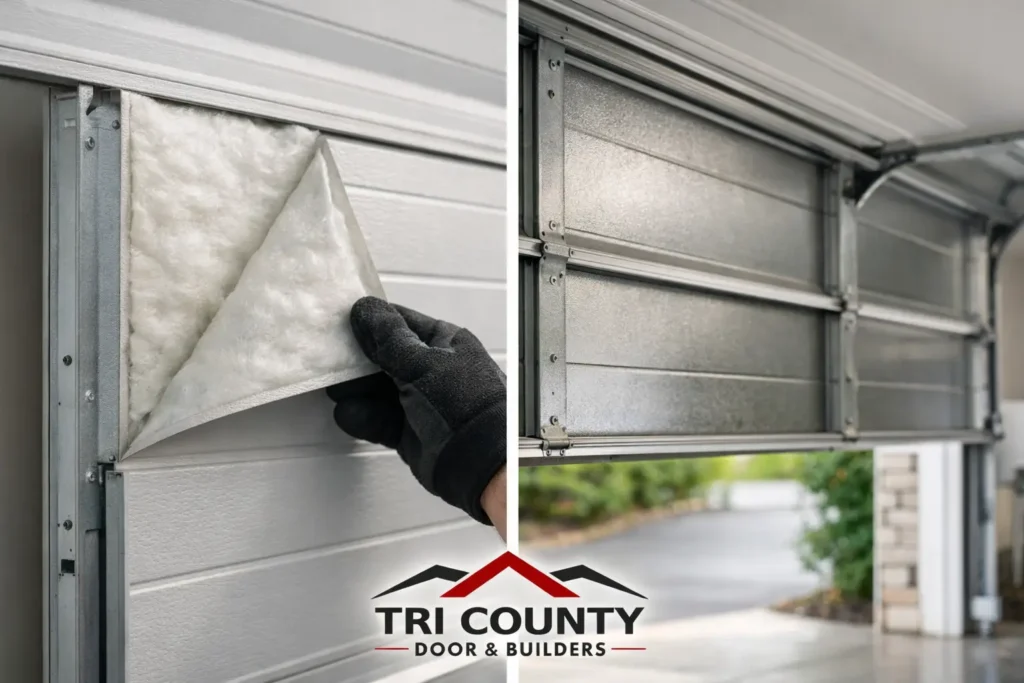
A garage door can be the largest moving part of your home or building, and it covers a surprisingly large amount of wall space. That is why the insulated garage door versus noninsulated decision affects more than the initial price. It can influence how comfortable the garage feels, how much outdoor noise gets through, how the door performs in changing weather, and whether the space is useful beyond parking vehicles.
For property owners in Southwestern Pennsylvania, the answer is rarely one-size-fits-all. A detached storage garage has different needs than an attached garage below a bedroom, a heated workshop, a farm building, or a commercial service bay. The right choice comes down to how you use the space and what you expect the door to do over the years.
Insulated Garage Door Versus Noninsulated: The Core Difference
A noninsulated garage door is typically made from a single layer of steel, aluminum, wood, or another exterior material. It provides security and weather protection, but there is little barrier between the outdoor temperature and the inside of the garage. These doors are often the most affordable option and can make sense for basic, unconditioned storage.
An insulated door includes a layer of insulation between the interior and exterior surfaces. Many residential steel doors use polystyrene panels or polyurethane foam. Polystyrene is generally a solid-value option, while polyurethane is injected into the door sections and tends to create a denser, stronger panel with a higher insulating value.
Insulation performance is measured by R-value. In simple terms, a higher R-value means the door resists heat transfer more effectively. But R-value should not be the only number driving the purchase. Door construction, panel thickness, weather seals, installation quality, and the condition of the garage itself all affect real-world performance.
When an Insulated Door Is Worth the Added Cost
An insulated garage door is usually the better investment when the garage is attached to the home. Even if the garage is not heated directly, it sits next to conditioned rooms and can affect their comfort. A cold garage can pull heat from nearby walls, floors, and living areas during winter. In summer, it can add heat where you least want it.
It is also a practical choice when the garage serves as a workshop, hobby space, laundry area, gym, office, or frequently used entry. Insulation will not turn a garage into a finished living room by itself, but it helps reduce temperature swings. Pairing an insulated door with properly insulated walls, ceiling, and air sealing creates a much more usable space.
Noise is another meaningful benefit. Insulated door sections tend to reduce the rattle and vibration associated with thinner, single-layer doors. They also limit some outside noise from traffic, equipment, and weather. If bedrooms, a family room, or a home office sit near or above the garage, that quieter operation can be worth the upgrade.
Insulated doors are often more rigid as well. The added layer gives the panels more strength, which can help them resist dents and flexing from daily use. That does not mean every insulated door is automatically heavy-duty, but comparable insulated steel doors generally feel more substantial than single-layer models.
A better fit for heated and working spaces
For a heated garage, an insulated door is not optional in the practical sense. Heating a space with a noninsulated overhead door is like leaving a large weak spot in the building envelope. The heating system will work harder, the area near the door may remain uncomfortable, and operating costs can rise.
The same thinking applies to a commercial bay where employees work near the door or where tools, materials, and equipment need protection from major temperature changes. A properly selected insulated sectional door can support comfort, energy control, and more dependable daily operation.
When a Noninsulated Door Makes Sense
Noninsulated garage doors still have a place. If you have a detached garage used strictly for parking, lawn equipment, seasonal items, or basic storage, a single-layer door may provide everything you need. It protects the opening, keeps out rain and wind when properly sealed, and costs less upfront.
For some agricultural buildings, equipment sheds, and unheated outbuildings, the goal is access and security rather than climate control. Spending more for insulation may not provide a return if people do not spend time inside and stored items are not temperature-sensitive.
A noninsulated door can also be a sensible option when budget is the main limitation and the existing garage has no insulation in its walls or roof. In that situation, upgrading only the door will help somewhat, but it will not solve the larger issue. A straightforward door that fits the budget now may be the responsible choice, especially if it is installed correctly and has reliable perimeter weatherstripping.
The trade-off is that the door will feel colder in winter, hotter in summer, and more prone to vibration and outdoor noise. Knowing those limitations ahead of time prevents disappointment after installation.
Look Beyond the Door Price
The initial price difference is often the first thing buyers notice, but it should not be the last part of the comparison. An insulated garage door generally costs more because it uses additional materials and a more complex construction. The exact difference depends on the size, style, insulation type, windows, hardware, and door gauge.
The long-term value may show up in several ways: lower heating and cooling demand for an attached or conditioned garage, less wear from panel flexing, better comfort while working inside, and a more finished feel for the property. It may also appeal to future buyers when the garage is a functional part of the home rather than a bare storage area.
Still, energy savings should be viewed realistically. If the garage has uninsulated walls, a poorly sealed attic, frequent open-door time, or large gaps around the structure, a premium door alone will not produce dramatic utility-bill changes. The best results come from treating the garage as a system.
Door Construction Matters as Much as Insulation
Two doors with similar R-values may not perform the same way. Pay attention to the steel thickness, panel design, hardware quality, track system, bottom seal, and insulation coverage. A door with insulation that fills the sections and a durable interior skin is different from a thin door with limited backing.
Weather seals deserve special attention in Pennsylvania. The bottom seal, side weatherstripping, and top seal are what help keep out wind-driven rain, snow, leaves, and pests. A good door with worn or poorly fitted seals will still allow drafts and moisture into the garage.
Windows can be a worthwhile design feature, but they should be selected carefully. If insulation is a priority, choose insulated glass and consider window placement. Windows near the top of the door bring in daylight while preserving privacy and reducing the chance of direct cold-air discomfort at floor level.
Do not overlook the opener and installation
An insulated door can weigh more than a comparable noninsulated model. That does not make it difficult to operate when it is properly installed, balanced, and paired with suitable springs and an appropriately rated opener. A well-balanced door should move smoothly and should not force the opener to do all the work.
Professional measurement and installation matter because garage doors are moving systems, not just panels in an opening. Correct track alignment, spring setup, reinforcement, and safety testing protect the door’s performance and help avoid premature repairs. For homeowners and business owners, dependable installation is often the difference between a door that works quietly for years and one that becomes a regular frustration.
How to Choose for Your Property
Start with the garage’s purpose. If it is attached to your home, heated, used as a workspace, or located near finished living areas, an insulated door is usually the stronger choice. If it is detached and used only for occasional storage or vehicle parking, a noninsulated model may be the better value.
Next, consider the building as a whole. Look at the walls, ceiling, windows, ventilation, and how often the door opens. A heated garage with an insulated door but major gaps elsewhere still needs attention. On the other hand, a well-sealed garage with a quality insulated door can be far more comfortable through winter cold and summer humidity.
Finally, choose a door built for the demands of the opening and the way you use it. Tri County Door & Builders helps property owners compare garage door options based on practical needs, budget, and local weather conditions rather than pushing a one-size-fits-all answer.
A garage door should fit the job it has to do. Choose insulation when comfort, noise control, and energy performance matter; choose a noninsulated door when simple, dependable access is the priority. Either way, quality construction, proper sealing, and correct installation will continue paying off every time the door opens.