




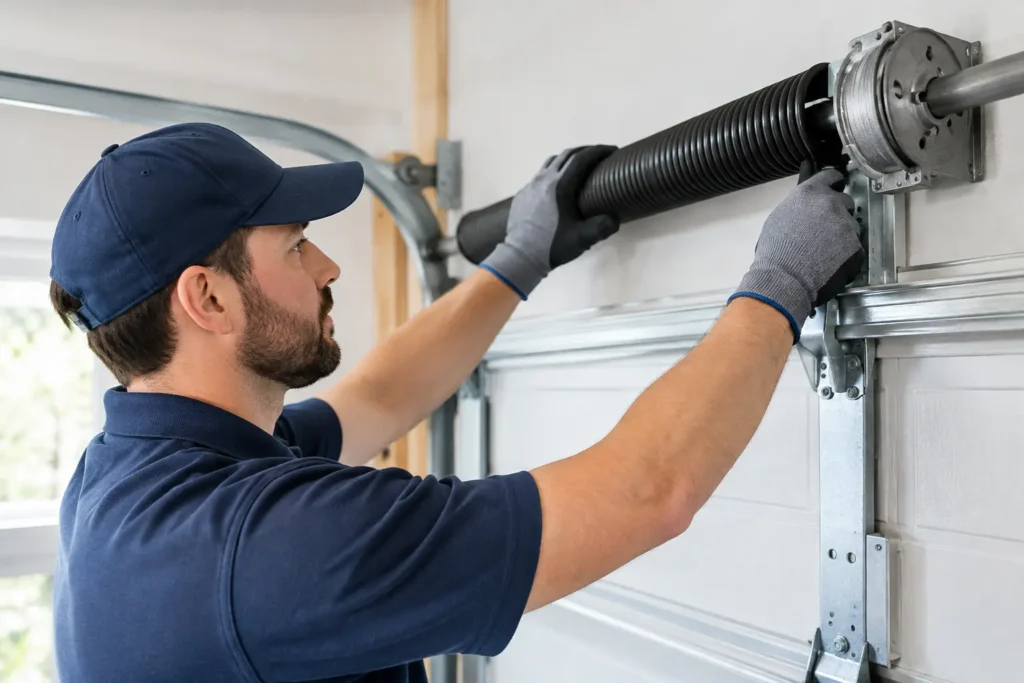
A garage door can look fine one minute and become nearly impossible to move the next. In many cases, the cause is a broken spring. When homeowners need same day door springs, they are usually dealing with more than an inconvenience: a vehicle may be trapped, a business entrance may be unsecured, or a heavy door may no longer operate safely.
Garage door springs do the hard work of counterbalancing the door’s weight. When one fails, the opener may hum without lifting the door, the door may stop halfway, or you may hear a sharp bang from inside the garage. Prompt service can restore access, but the right repair depends on the type of spring, the door’s size and weight, and whether other parts were damaged when the spring broke.
When Same Day Door Springs Make Sense
A broken spring is often an urgent repair, especially when the garage is the main entrance to the home or when a commercial door protects equipment, inventory, or vehicles. Same-day service is particularly useful when the door will not open, will not close securely, or has become stuck in a position that creates a safety or security concern.
There are also situations where waiting until the next available appointment may be reasonable. If the door is fully closed, secure, and there is another safe way into the property, the repair may not be an emergency. Even then, it is wise to schedule service soon. Continuing to run the opener with a broken spring can strain the motor, damage the gear system, bend components, or cause the door to move unpredictably.
Availability can depend on the spring size required, the door style, travel time, and the number of urgent calls already scheduled that day. A qualified technician should confirm the door details before promising a repair window. That is better than sending the wrong part or attempting a temporary fix that does not address the real problem.
Signs Your Garage Door Spring Has Failed
The most obvious sign is a loud crack or bang from the garage. Torsion springs are under substantial tension, and when they break, the sound can resemble something heavy falling. You may then notice a visible gap in the spring above the door.
Extension springs, which run along the sides of the horizontal tracks, can also break or stretch out. With either style, the door may suddenly feel much heavier than normal. A typical garage door can weigh hundreds of pounds, which is why a functioning spring system is not optional.
Other common warning signs include an opener that cannot lift the door, a door that rises only a few inches before stopping, uneven movement, or cables that appear loose or off the drum. A door that is crooked in the opening should not be forced. The failed spring may be only part of the issue, and forcing the door can make cable and track damage worse.
Do Not Keep Pressing the Opener Button
Repeatedly activating the opener will not overcome a broken spring safely. Garage door openers are designed to guide a balanced door, not lift its full weight on their own. The opener may continue trying, but that effort can overheat the motor or damage internal parts.
If the door is open and will not close, keep people, pets, and vehicles away from the opening. Do not stand beneath the door or attempt to pull it down by hand unless a trained professional has instructed you to do so. If the door is closed, leave it closed until the repair is completed.
Why Spring Repair Is Not a DIY Job
There are many home maintenance tasks that a property owner can handle with basic tools. Replacing a garage door spring is not one of them. Torsion springs store high levels of energy. Improper winding, incorrect tools, a slipping winding bar, or a mismatched replacement spring can lead to serious injury and damage to the door.
The goal is not simply to install a new spring. The spring must be correctly matched to the door’s weight, height, drum setup, and track system. A spring that is too strong can cause the door to rise too quickly. One that is too weak can leave the opener carrying more load than it should. Proper balance is what allows the door to open smoothly, stay in position when lifted manually, and close without slamming.
A professional repair also gives the technician a chance to inspect cables, rollers, drums, bearings, hinges, tracks, and the opener’s safety settings. These components work together. A new spring may solve the immediate problem, but a worn cable or damaged roller can create another service call if it is not identified early.
What Happens During a Spring Service Call
A dependable technician starts by confirming the door type and diagnosing the failure. The door is secured before any spring work begins. The technician then measures and selects the proper replacement springs based on the existing system and the door’s actual requirements.
After installation, the door is balanced and tested by hand before the opener is reconnected. The technician should run the door through several full cycles, verify that it opens and closes evenly, and check that the opener’s reversing safety system responds correctly. If the door has two torsion springs, replacing both is often recommended when one breaks. They were installed at the same time and have typically completed the same number of cycles, so the second spring may be near the end of its service life as well.
That recommendation is not automatic in every case. The right choice depends on the age and condition of the remaining spring, the door’s use, and the customer’s budget. A clear explanation of the options helps property owners make a practical decision instead of guessing.
Choosing the Right Replacement Spring
Garage door springs are not one-size-fits-all parts. Wire diameter, inside diameter, length, wind direction, and cycle rating all matter. A standard spring may be suitable for a lightly used residential door, while a higher-cycle spring can be worthwhile for a family that uses the garage as the primary daily entrance.
For commercial and agricultural buildings, spring selection may require even more attention. Larger doors, frequent daily cycles, and heavier construction place greater demands on the system. Downtime can also affect deliveries, equipment access, and daily operations. In those situations, choosing a spring designed for the door’s workload may cost more upfront but can reduce interruptions over time.
Price matters, but the lowest initial price is not always the best value. A correctly sized, quality spring installed with a complete safety check protects the door, the opener, and the people using the building. It also helps avoid the frustration of a repair that fails prematurely.
How to Help Your Springs Last Longer
Springs eventually wear out because every open-and-close cycle uses a small portion of their service life. Still, basic care can reduce unnecessary stress on the system. Keep the tracks clear, avoid hitting the door with vehicles or equipment, and do not ignore grinding, squeaking, or uneven movement.
An annual garage door inspection is a practical investment, particularly before winter weather places more demand on the door. Lubrication of appropriate moving parts, balance testing, hardware checks, and safety sensor testing can catch concerns before they become a no-access situation. Property owners should also avoid adding heavy insulation, windows, or decorative hardware without confirming that the spring system can be adjusted to match the added weight.
For homeowners and businesses across Westmoreland, Somerset, and Fayette Counties, Tri County Door & Builders provides local garage door expertise with a focus on the repair that fits the door and the job at hand. When a spring breaks, accurate diagnosis and safe installation matter far more than a rushed guess.
A broken spring may stop your day, but it does not have to become a larger door or opener problem. Treat the door as heavy equipment, keep it secured, and have the spring system evaluated by a qualified professional who can return it to safe, balanced operation.