




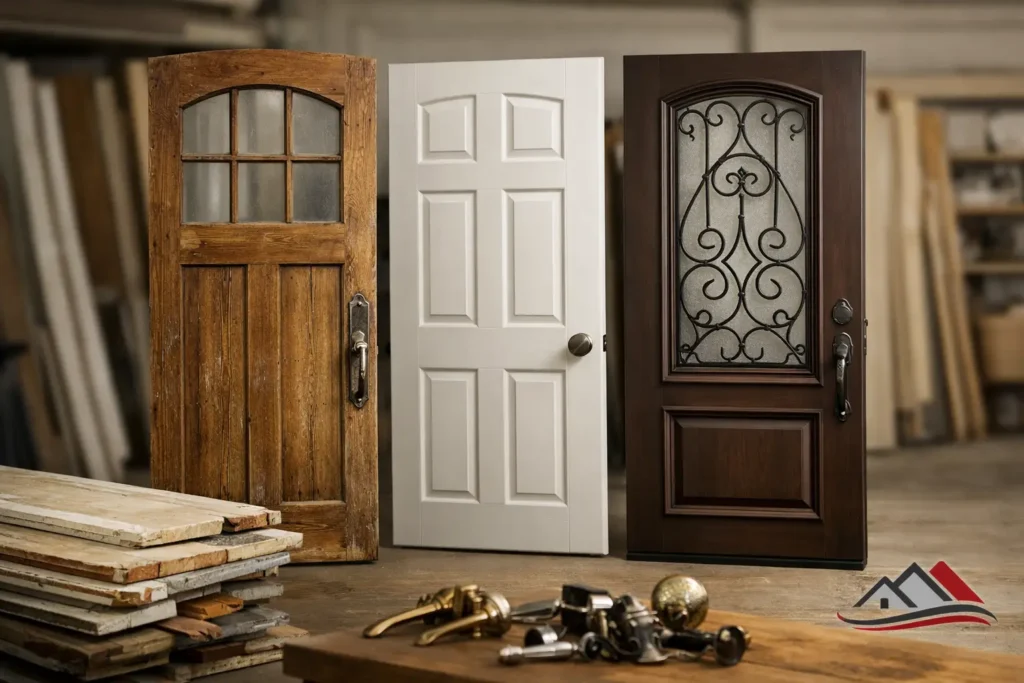
A used garage door can look like a bargain when a homeowner is replacing a damaged door, finishing a detached garage, or improving a barn or workshop on a tight budget. But used doors are not all the same. A door that was removed carefully from a dry, well-maintained garage may have useful life left. One that has been exposed to weather, hit by a vehicle, or taken apart without its matching hardware can become an expensive problem after installation.
For property owners in Southwestern Pennsylvania, the decision comes down to more than the sale price. The door needs to fit the opening, operate safely, stand up to changing weather, and provide the level of insulation and security the building requires. Here is how to decide whether a used door is a practical purchase or a shortcut worth avoiding.
Why Used Doors Can Be Appealing
The obvious benefit is cost. A used door may be available for a fraction of the price of a new model, especially when someone is remodeling, converting a building, or replacing a door simply to update its appearance. For a basic storage building or a garage with limited use, that savings can be meaningful.
Older doors can also be a reasonable match for an existing building. If a property has several garage bays with a discontinued panel design, finding a compatible used section may be easier than replacing every door. Used entry doors may also appeal to owners restoring an older home, where solid wood construction or a period-appropriate style matters more than modern features.
Still, a low purchase price does not tell the whole story. Delivery, repairs, replacement hardware, weatherstripping, opener adjustments, and professional installation can narrow the difference between a used door and a new one. If the used door is not the right size or requires major work before it can operate properly, the savings disappear quickly.
The First Question: What Kind of Door Is It?
“Used doors” can refer to entry doors, commercial hollow-metal doors, storm doors, sliding doors, or sectional overhead garage doors. Each type has different risks, but garage doors deserve the closest inspection because they are heavy moving systems, not just building materials.
A used exterior entry door may be a good candidate if the slab is straight, the frame is sound, and its size works for the opening. A used commercial door may make sense for a utility room or outbuilding if fire ratings, hardware requirements, and local code considerations are addressed.
A used overhead garage door is more complicated. Its panels, tracks, rollers, hinges, cables, torsion system, drums, and opener all need to work together. A door can look fine from the driveway while hidden damage keeps it from moving safely or sealing correctly. For that reason, the condition of the system matters as much as the condition of the panels.
What to Inspect Before Buying a Used Garage Door
Start with measurements. Measure the finished width and height of the opening, then measure the headroom above it and the room along each side. A door that is close in size is not necessarily usable. Sectional garage doors are built around specific opening dimensions, track layouts, and spring configurations.
Look closely at every panel. Small cosmetic scratches are one thing; bent stiles, cracked joints, delaminated insulation, rust along the bottom edge, or deep impact damage are another. Set a straightedge across questionable areas if possible. Warped sections can bind in the tracks and place extra strain on the opener.
Check the bottom section with extra care. It sees the most moisture, road salt, debris, and accidental impacts. On steel doors, rust may begin at seams or behind damaged paint. On wood doors, probe for soft spots, swelling, peeling, and rot. On insulated doors, look for gaps or crushed insulation that reduce performance.
Ask whether the door includes its original tracks and hardware. Tracks from one door should not automatically be paired with another. Different door heights, weights, roller sizes, and lift systems require compatible parts. Missing hinges, brackets, or reinforcement struts should be priced as replacement items, not treated as minor details.
Do not rely on old springs or cables. Garage door springs are under extreme tension and have a limited service life. Their remaining cycle count is impossible to confirm with confidence on a used system. Reusing unknown springs, cables, or bottom brackets is not a smart place to cut costs. These components should be evaluated and installed by a qualified garage door professional.
Finally, inspect the weather seal and the door’s overall fit. A door that leaves daylight at the sides, top, or bottom invites wind-driven rain, pests, and winter drafts into the building. That may not matter for an unheated equipment shed, but it matters a great deal for an attached garage, insulated workshop, or commercial space.
When a Used Door Makes Sense
A used door can be a good value when it is structurally sound, correctly sized, and intended for a lower-demand application. For example, a clean, lightly used non-insulated garage door may work well on a detached storage garage where appearance and thermal performance are not major concerns.
It can also make sense when replacing a single damaged section of an existing door. Matching the panel profile, color, and insulation thickness is not always easy, but a compatible used panel can prevent a full replacement when the rest of the door is in good condition.
The best used-door purchases are usually straightforward: the opening matches, the door has no structural damage, the needed hardware is available, and the total installed cost still provides real savings. If any one of those factors is uncertain, a new door often becomes the more practical option.
When New Is the Better Investment
New garage doors provide advantages that are difficult to duplicate with used materials. You can select the right size, panel style, color, insulation level, window layout, wind-load option, and operating hardware for the building. You also get components designed to work together, rather than a collection of parts with an unknown history.
Insulation is a major consideration in this area. An attached garage can transfer cold into nearby living spaces, and a workshop becomes hard to heat when the largest wall opening has little thermal resistance. A new insulated door with proper perimeter seals may reduce drafts and make the space more comfortable year-round. It will cost more upfront, but the difference can be justified for a space used every day.
Security and reliability matter too. A worn used door may have weak locks, damaged panels, tired rollers, or an outdated reinforcement setup. For a business, a farm building, or a garage where tools and equipment are stored, downtime or a break-in can cost much more than the initial savings.
New doors also make more sense when curb appeal is part of the project. Garage doors take up a large visual portion of many homes. A door that is dented, faded, mismatched, or poorly fitted can pull down the appearance of an otherwise well-kept property.
Installation Is Not the Place to Guess
A garage door must be level, balanced, properly tracked, and correctly tensioned to work as intended. An opener cannot compensate for a door that is too heavy, out of balance, or binding in the tracks. In fact, forcing an opener to lift a problem door can damage the opener and create a safety concern.
Professional installation is especially valuable when a used door is involved because the installer can assess whether the sections, tracks, spring system, and opening are actually compatible. Sometimes a door that looked like a good deal can be made safe with a few replacement components. Other times, the correct recommendation is to walk away before more money is spent.
Tri County Door & Builders helps homeowners, contractors, and property owners evaluate garage door options based on the building, the budget, and the work the door needs to do. That practical approach matters whether the project is a simple replacement, a new pole building, or a commercial bay door installation.
A Better Way to Compare the Cost
Before buying, compare the complete cost of the used option against a new door, not just the advertised price. Include pickup or delivery, missing parts, new weatherstripping, track and spring work, repairs, installation, and the likely lifespan of the finished system. If the used door needs several hundred dollars in parts and labor, a new door with the right insulation and warranty may be the stronger value.
There is nothing wrong with choosing used materials when the condition is clear and the application is right. The key is to treat a garage door as a working system, not a simple panel that fills an opening. Buy the door that fits the building, protects what is inside, and gives you confidence every time it goes up or down.