




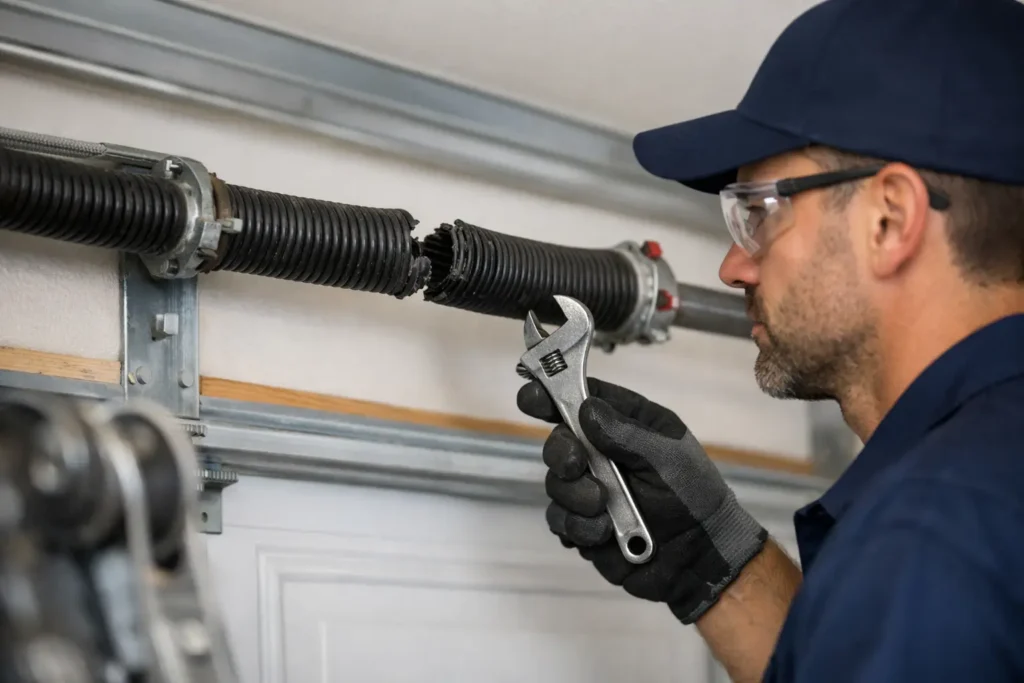
A garage door that suddenly feels too heavy, stops halfway, or opens with a sharp bang is often dealing with one small but critical component: the springs. Garage door springs do the heavy lifting every time the door moves. When one fails, a door that seemed fine yesterday can become difficult to operate, unsafe to use, or stuck in place.
For homeowners, business owners, and property managers, spring trouble is not a repair to put off. A garage door can weigh well over 100 pounds, and larger insulated or commercial doors weigh considerably more. The springs counterbalance that weight so the opener and the person using the door are not carrying the load.
What Garage Door Springs Actually Do
Garage door springs store mechanical energy when the door closes and release it as the door opens. That balance is what allows a properly working door to lift smoothly with a hand or a garage door opener. The opener is designed to guide the door through its travel, not force a full door weight upward every day.
When springs lose tension, wear out, or break, the opener has to work far harder than it should. That can lead to stripped gears, damaged cables, bent hardware, and an opener that quits before its time. More importantly, a door with failed springs can drop quickly or become unstable.
Most residential systems use one of two spring styles.
Torsion springs
Torsion springs sit on a metal shaft above the garage door opening. As the door closes, the springs wind tighter. As it opens, they unwind in a controlled way to help lift the door. Torsion systems are common because they provide balanced lifting force and work well for heavier doors.
A broken torsion spring often leaves a visible gap in the coil. You may also hear a loud crack or bang in the garage when it breaks. That sound can be startling, but it is typically the spring releasing its stored tension.
Extension springs
Extension springs run along the horizontal tracks on either side of the door. They stretch when the door closes and contract to assist with opening. These systems are frequently found on lighter or older residential garage doors.
Extension springs should have safety cables running through their centers. If an extension spring breaks without a containment cable, it can become a dangerous projectile. If you notice a stretched, damaged, or loose extension spring, it is best to stop using the door until a qualified technician can inspect it.
Signs Your Garage Door Springs Are Wearing Out
Springs rarely offer a precise warning before they break, but a changing door usually tells the story. A healthy garage door should move evenly, sit level, and operate without excessive strain or noise.
Pay attention if the door starts opening only a few inches before reversing, moves more slowly than usual, hangs unevenly, or makes loud squealing, popping, or grinding sounds. You may also notice that the opener strains, the top section of the door shakes, or the door feels unusually heavy when you release the opener and lift it manually.
A door that will not open after a loud bang is one of the clearest signs of a broken spring. Do not keep pressing the opener button in hopes that it will power through. Repeated attempts can damage the motor, lift cables, rollers, or track system.
There is one basic check property owners can perform safely. With the garage door fully closed, disengage the opener using the emergency release cord, then carefully lift the door by hand. A balanced door should stay roughly in place when opened partway. If it drops, shoots upward, or feels very heavy, the spring system may need adjustment or repair. If the door is too heavy to lift comfortably, stop immediately and call for service.
Why Spring Repairs Are Not a DIY Job
There are many maintenance tasks a homeowner can handle around a garage door. Keeping the tracks clear, watching for loose bolts, and lubricating moving metal parts with an appropriate garage door lubricant are reasonable examples. Replacing or adjusting springs is different.
Garage door springs are under significant tension. Torsion spring work requires specialty winding bars, the right replacement spring size, careful cable handling, and proper balancing after installation. Using improvised tools or guessing at the correct tension creates a real risk of injury and damage to the door.
The right spring is not determined by door width alone. A technician considers the door’s height, weight, drum type, track setup, cable configuration, and intended use. An insulated steel door, wood-look door, or oversized commercial door may require a much different spring setup than a basic single-car garage door.
Trying to replace only what looks broken can also miss the larger issue. If one spring has reached the end of its cycle life, a paired spring may be close behind. Replacing both matched springs at the same time often makes practical sense because it restores balance and reduces the chance of another service call in the near future. Still, the best choice depends on the condition of the system and the type of door involved.
The Cost of Waiting on Broken Springs
A broken spring is inconvenient, especially when your vehicle is inside the garage or a business door needs to open for the workday. But continuing to use the door can make a manageable repair more expensive.
An opener pulling against a dead spring can overheat or damage internal gears. Cables can jump off drums, especially if the door is operated while uneven. A crooked door can bind in the tracks, bend rollers, or put stress on sections and hinges. In the worst case, an unbalanced door can fall unexpectedly.
For commercial properties, delayed repair can affect deliveries, equipment access, security, and daily operations. For agricultural buildings and workshops, it may prevent access to machinery when timing matters most. Prompt service helps protect both the door system and what is behind it.
How Long Do Garage Door Springs Last?
Spring life is usually measured in cycles, with one cycle equal to the door going up and coming back down. Many standard residential springs are designed for about 10,000 cycles. For a garage used twice a day, that may translate to roughly seven to 10 years. A busy household that uses the garage as its main entry may reach that number sooner.
Higher-cycle springs are available for doors that see frequent use. They can cost more upfront, but may be worthwhile for active households, attached garages, small businesses, and properties where a door is opened many times each day. A local garage door professional can explain whether that upgrade fits your door and budget.
Weather also plays a part in Southwestern Pennsylvania. Cold temperatures can make metal components less forgiving, while moisture and road salt tracked into a garage can contribute to corrosion over time. Springs do not fail only in winter, but seasonal temperature changes often reveal a system that was already worn.
Practical Maintenance That Helps Springs Last
No maintenance plan can make springs last forever, but regular attention can help the entire garage door system operate with less strain. Schedule a visual check a few times each year. Look for frayed cables, worn rollers, loose hinges, rust, track damage, and gaps or distortion in the spring coils.
Lubricate springs, rollers, and hinges with a garage-door-specific lubricant as recommended by the product instructions. Avoid heavy grease that collects dirt. Keep the tracks clean, but do not heavily lubricate the track itself, since rollers need a clean running surface.
Test the door’s balance periodically and listen for new noises. If the door has safety sensors, make sure they are aligned and free of debris. These simple steps do not replace professional service, but they can reveal trouble before the door stops working completely.
When to Call for Garage Door Spring Service
Call for professional help if you see a broken spring, loose or frayed cable, crooked door, damaged track, or a door that is too heavy to lift. Do the same if the opener hums but the door does not move, or if the door reverses despite a clear opening.
Tri County Door & Builders helps property owners throughout Westmoreland, Somerset, and Fayette counties with garage door repair, replacement, and installation needs. A proper service visit should include more than swapping a part. The technician should assess spring condition, balance, cables, rollers, tracks, hinges, and opener performance so the entire system can operate safely.
Your garage door is one of the largest moving parts of your property. When it starts acting differently, treat that change as useful information, not an inconvenience to work around. A timely inspection can keep a worn spring from becoming a stuck door, a damaged opener, or a preventable safety problem.