




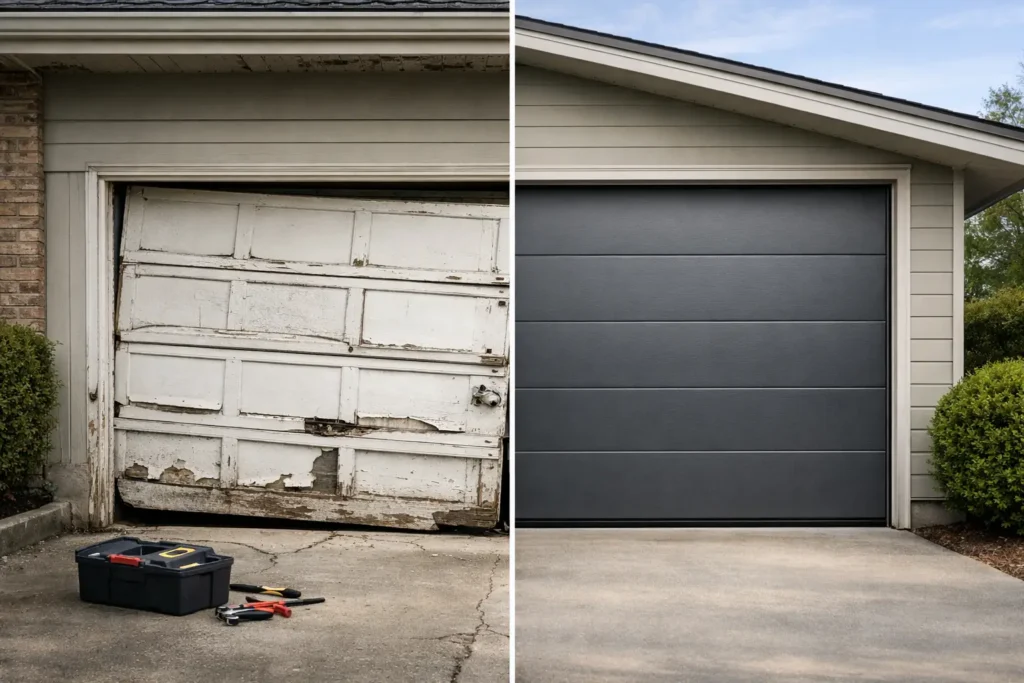
A garage door can look acceptable from the driveway while its springs, tracks, panels, and opener are working harder than they should. That is why knowing when to replace a garage door is about more than curb appeal. It is a decision that affects safety, security, energy use, and the daily reliability of one of the largest moving systems on your property.
For homeowners, farm owners, and business owners in Southwestern Pennsylvania, winter weather, humidity, road salt, and regular use can all shorten the life of a garage door system. Some problems call for a straightforward repair. Others are a clear signal that investing more money in an aging door is no longer the practical choice.
When to Replace a Garage Door Instead of Repairing It
A repair makes sense when the problem is isolated and the door itself remains structurally sound. A broken spring, worn rollers, damaged weatherstripping, or an out-of-adjustment opener can often be corrected without replacing the entire door. Regular maintenance and timely repairs can add useful years to a quality door.
Replacement becomes the better value when several parts are failing at once, the door has major physical damage, or repairs keep adding up without restoring dependable operation. A door that is more than 15 to 20 years old may also be nearing the end of its practical service life, particularly if it has seen heavy daily use or has not received consistent maintenance.
The key question is not simply, “Can this be repaired?” Nearly any component can be repaired or replaced. The better question is, “Will this repair give the door safe, dependable service for years to come?” If the answer is no, replacement deserves serious consideration.
8 Signs Your Garage Door May Need Replacement
1. The door has serious panel damage
A small dent in one panel is usually cosmetic and may not justify a new door. Deep dents, bent sections, cracked wood, widespread rust, or collision damage are different. When panels no longer line up correctly, the door may bind in the tracks, put pressure on the opener, or leave gaps that allow weather and pests inside.
Steel doors with rust concentrated in a small area may be repairable. But rust that has spread across multiple panels or weakened the bottom section often indicates a larger problem. In that situation, replacing one panel may not be possible or may leave you with a mismatched appearance.
2. It moves unevenly, shakes, or comes off track
A garage door should travel smoothly and stay level as it opens and closes. Loud scraping, jerking movement, visible shaking, or a door that hangs unevenly should not be ignored. These symptoms can come from worn rollers, damaged tracks, failing cables, or issues with springs and hardware.
Some of these parts can be repaired. However, if an older door has repeated track problems, warped sections, and worn hardware, it may be time to replace the system rather than chase one repair after another. Do not try to force a crooked or off-track door back into operation. Garage doors are heavy, and springs and cables store significant tension.
3. You are facing frequent repair calls
One repair after years of dependable use is normal. Multiple service calls in a short period are a warning that the door is becoming unreliable. For example, replacing a spring may be sensible, but replacing springs, rollers, cables, hinges, and panels over the next year can quickly change the math.
Keep track of what you have spent. If repair costs are approaching a meaningful portion of a new installed door, replacement can provide better long-term value. A new door also comes with current hardware, improved weather protection, and a warranty that an older patched-together system cannot offer.
4. The door does not close securely
A door that will not close all the way is a security concern for a home, workshop, farm building, or commercial property. It can also invite rain, snow, leaves, rodents, and cold air into the garage. Sometimes the issue is as simple as a sensor alignment or opener adjustment.
If the door itself is warped, the bottom seal cannot make contact, or the panels no longer sit squarely in the opening, adjustments may only provide a temporary fix. A properly fitted replacement door can restore a tight, dependable closure and help protect what is stored inside.
5. Cold air and moisture are getting through
Many older garage doors are uninsulated or have worn seals around the edges and bottom. If the garage is attached to your home, that heat loss can make nearby rooms less comfortable and put added demand on your heating system. Moisture entering through gaps can also damage tools, stored materials, vehicles, and finished spaces.
Replacing weatherstripping is worthwhile when the door is otherwise in good condition. But when the door has poor fit, damaged panels, or little insulation value, an insulated replacement door is often the smarter upgrade. This is especially useful for garages used as workshops, storage areas, hobby spaces, or entrances to a conditioned home.
6. The door is excessively noisy
No garage door is completely silent, but grinding, banging, popping, or screeching sounds should be investigated. Noise can indicate dry rollers, loose hardware, an opener issue, or a door that is out of balance. Routine service may solve the problem if the system is still in sound condition.
Noise paired with slow operation, vibration, panel movement, or recurring breakdowns is more concerning. Older doors may have hardware that is simply worn beyond a reasonable repair point. A replacement door and properly matched opener can make daily operation quieter and more dependable.
7. Safety features are outdated or unreliable
Garage doors should reverse when they encounter an obstruction and should use properly functioning photo-eye sensors. An opener that fails these basic tests needs service immediately. Modern openers also offer features such as better lighting, battery backup options, and monitored operation, but the first priority is always safe movement.
If the door is heavy, difficult to lift manually, or prone to slamming shut, the springs may be failing or incorrectly balanced. Springs should only be serviced by trained professionals. When a door has outdated safety concerns along with aging panels and hardware, replacing the full system can reduce risk and eliminate uncertainty.
8. You are improving the property anyway
Replacement is not always driven by failure. If you are installing new siding, roofing, windows, or exterior trim, an outdated garage door can stand out for the wrong reasons. A new door can improve the appearance of the building while adding insulation, durability, and more reliable operation.
For commercial properties, agricultural buildings, and detached garages, the right door also has to fit the job. Clearance needs, equipment access, wind exposure, insulation requirements, and frequency of use all matter. Choosing based on price alone can lead to a door that looks fine initially but does not hold up to the demands of the building.
Choosing the Right Replacement Garage Door
The best replacement depends on how the building is used. A homeowner with an attached garage may prioritize insulation, quiet operation, and a style that complements the house. A contractor or small business owner may need a durable steel door designed for frequent cycles. A farm or equipment building may require wider openings, dependable hardware, and a configuration that supports larger vehicles.
Material matters as well. Steel doors are a practical choice for many properties because they offer durability, low maintenance, and a wide range of insulated options. Wood can provide a traditional appearance but requires more upkeep. Aluminum and glass may suit certain modern designs, though they are not always the best fit for every climate or building use.
Before ordering, confirm the opening dimensions, headroom, side room, track requirements, and opener compatibility. The right installation is just as important as the door itself. A quality product installed poorly can still operate badly, wear out early, and create safety problems.
Do Not Wait for a Complete Failure
A garage door rarely fails at a convenient time. It may stop working during a snowstorm, leave your vehicle trapped inside, or refuse to secure the building at the end of a long workday. Planning replacement before a total breakdown gives you time to compare materials, insulation options, styles, and installation needs without pressure.
Tri County Door & Builders helps property owners make practical garage door decisions based on the condition of the existing system, the building’s use, and the budget for the project. If your door is showing more than one of these signs, a professional assessment can clarify whether a targeted repair still makes sense or whether replacement will deliver better value. A dependable door should open safely, close tightly, and let you get on with the rest of your day.