


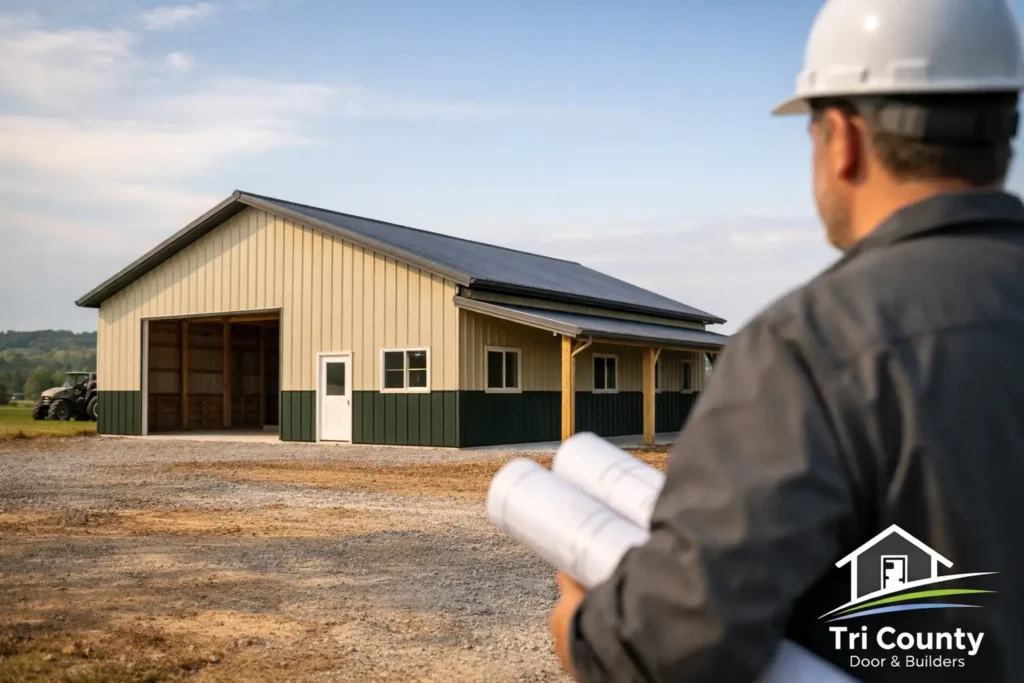
A good pole barn starts showing its quality long before the first post goes in the ground. If you are looking for a pole barn builder Connellsville property owners can rely on, the real question is not just who can put up a building. It is who can help you get the right building for the way you plan to use it, the site you are building on, and the weather it will have to handle for years to come.
In this part of Pennsylvania, a pole building has to do more than look good on day one. It has to stand up to snow loads, wind, muddy shoulder seasons, and the everyday demands of farm work, storage, business use, and home ownership. That is why choosing a builder should be about more than a low initial price.
Why a local pole barn builder in Connellsville matters
On paper, many builders can sound similar. They all talk about custom sizes, durable materials, and competitive pricing. The difference usually shows up when the job gets specific.
A local builder understands the kinds of issues that come up on properties around Connellsville and throughout Fayette County. Sloping ground, drainage concerns, access for equipment, and seasonal scheduling can all affect a project. So can the way customers in this area actually use pole barns. Some need equipment storage that can take hard use. Some want a garage with room for trucks, tools, and workshop space. Others are planning a livestock shelter, commercial storage building, or a barndominium shell that needs to be done right from the start.
That local perspective matters because pole barns are not one-size-fits-all structures. A building that works well on one property may be a poor fit on another. The right builder helps you avoid paying for features you do not need while making sure you do not cut corners in places that will cost you later.
What a pole barn builder Connellsville customers choose should offer
The best projects usually start with better questions. Before any quote is finalized, a builder should be asking how you plan to use the structure, what vehicles or equipment need to fit inside, whether insulation will matter, what kind of door access you need, and how the building may need to serve you five or ten years from now.
That matters because use drives design. A simple storage barn has different needs than a commercial workshop. A hobby farm building has different priorities than a finished garage. Ceiling height, post spacing, entry layout, ventilation, and roof style all affect how useful the building will be after construction is complete.
A dependable builder should also be clear about materials. Not all metal panels, trim packages, fasteners, and framing choices perform the same way over time. In Southwestern Pennsylvania, durability is not a luxury upgrade. It is part of making sure the building holds up through real weather and real use.
Good service also means honest pricing. The cheapest quote is not always the best value if key components are missing, materials are lighter grade, or site conditions were not properly considered. A professional quote should help you understand what is included, what may change based on the property, and where optional upgrades make sense.
Design decisions that affect long-term value
A lot of buyers focus first on square footage, and that is understandable. But layout and specifications often matter just as much as size.
Door placement is a common example. If you are storing equipment, trailers, or work vehicles, the right overhead or sliding door location can make daily use much easier. If you choose the wrong placement to save a little on the front end, you may end up fighting the building every time you move something in or out.
Roof pitch is another detail that should match both function and appearance. A lower pitch may fit a simple storage need, while a different pitch may better suit a garage, workshop, or residential-style structure. Ventilation, overhangs, and insulation planning also deserve attention early, especially if the building will be used year-round.
Then there is future flexibility. Some owners know exactly what they need today but may want extra bays, interior finishing, or upgraded overhead doors later. It often makes sense to plan for that now, even if the full build-out happens in stages. A knowledgeable builder will talk through those trade-offs instead of pushing a standard package.
Materials, installation, and why quality still wins
Pole barns are popular because they offer a practical, efficient way to create usable space. But that does not mean every building is built to the same standard.
Post quality, treated lumber, metal gauge, fastener systems, truss engineering, and roof and wall components all affect how the structure performs. Better materials usually mean better resistance to wear, moisture, and weather exposure. That is especially important for owners who plan to use the building heavily or hold onto the property for the long term.
Installation quality matters just as much. A solid material package can still underperform if layout, leveling, fastening, and finishing are handled poorly. That is one reason many property owners prefer working with an established regional company that understands both supply and installation. The fewer disconnects between product selection and field execution, the better the final result tends to be.
For some customers, a DIY kit may be the right move. For others, full installation makes more sense. There is no single right answer. It depends on your timeline, experience, available labor, and tolerance for setbacks. The important thing is working with a supplier or builder who gives straightforward guidance instead of treating every project the same.
Common mistakes to avoid when hiring a builder
One of the biggest mistakes is buying only on price. A low number can look good until you realize it did not include site prep considerations, the door package you need, upgraded materials, or realistic labor expectations. That is when a bargain turns into a headache.
Another mistake is underbuilding. People sometimes choose too little height, too few access points, or no allowance for future needs because they are trying to keep the budget down. Sometimes that is necessary, but sometimes a modest adjustment upfront adds far more long-term usefulness than it costs.
It is also worth being cautious with vague proposals. If a builder cannot explain what materials are being used, what the timeline looks like, or what conditions could affect cost, that uncertainty usually does not improve once the job starts.
A more dependable approach is to work with a company that knows the region, communicates clearly, and can help match the building to your actual goals. That practical guidance is often what saves money in the long run.
Pole barns for farms, homes, and business properties
One reason pole buildings remain so popular is their versatility. Around Connellsville, they serve a wide range of needs.
For homeowners, a pole barn can solve storage problems fast. It can create space for vehicles, recreational equipment, lawn tools, or a serious workshop without the cost structure of a fully conventional build. For farmers, pole barns can provide equipment storage, hay protection, livestock shelter, or utility space designed around how the property operates.
For small businesses, they can be a smart option for service bays, inventory storage, contractor shops, or mixed-use workspaces. The right design depends on traffic, clearance, access, and whether the building will need insulation or interior finishing. That is where an experienced builder adds value. They help sort out what fits the use instead of just selling a shell.
Companies like Tri County Door & Builders have built their reputation on that kind of practical support – helping customers weigh options, choose quality materials, and get a building that fits both budget and purpose.
How to compare quotes without getting lost in the details
If you are reviewing multiple estimates, start by looking past the total and into the scope. Make sure you are comparing similar sizes, materials, door packages, trim, and structural specifications. Two quotes can look close in price while being very different in what they actually deliver.
Ask how the builder handles site-related issues, what the expected timeline is, and whether the design reflects your intended use. If one quote is much lower, ask why. Sometimes there is a valid reason. Other times, important items were simply left out.
It also helps to consider who will be available after the sale. Local service matters when questions come up, adjustments are needed, or future improvements are on the table. A builder with roots in the region has more reason to stand behind the work than someone chasing volume from a distance.
Choosing the right pole barn builder is really about confidence. You want to know the building will do its job, the materials will hold up, and the people behind the project will give you straight answers. If you are planning a new structure in or around Connellsville, take the extra time to find a builder who treats your property like it matters. That usually shows up not in flashy promises, but in solid advice, fair pricing, and a building you will be glad you put up years from now.