




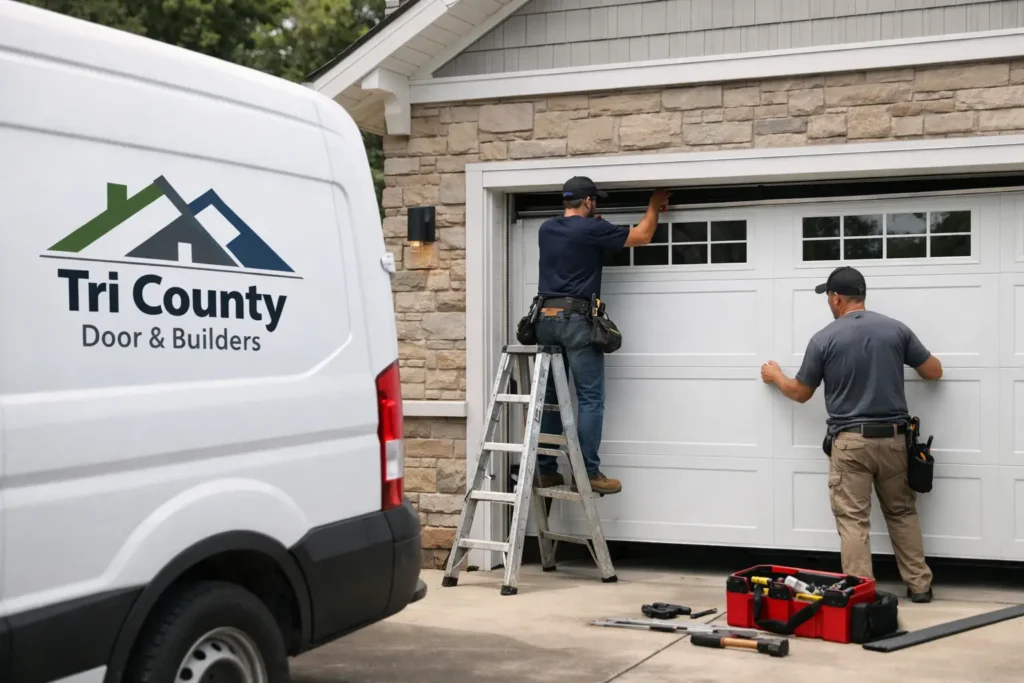
A garage door is often the largest moving part of a home or work building. When it is too light for the opening, poorly insulated, improperly balanced, or installed without attention to the track and framing, the problems show up quickly. For garage door installation Westmoreland County property owners can rely on, the goal is not simply to get a new door in place. It is to choose a system that fits the building, handles local weather, operates safely, and provides dependable service for years.
For homeowners, that may mean a quieter door that keeps a garage more comfortable in winter. For farmers, contractors, and business owners, it may mean a durable commercial door that opens reliably when equipment, vehicles, or deliveries need to move. The right answer depends on the opening, how the space is used, and the condition of the existing structure.
Start With the Building, Not the Door Style
A new garage door can improve curb appeal, but appearance should come after the practical details. Before selecting a door, measure the width and height of the finished opening, along with the available headroom, side room, and backroom. These dimensions determine what track system, spring setup, and door configuration will work correctly.
Older detached garages and agricultural buildings deserve extra attention. Framing can shift over time, concrete floors may no longer be level, and the opening may not be perfectly square. Those conditions do not automatically prevent a new installation, but they can affect the preparation work required. A quality installation addresses the opening as it exists instead of forcing a standard door into a space that needs adjustment.
Usage matters just as much. A two-car residential garage used for daily vehicles has different needs than a shop where machinery is moved in and out several times a day. A commercial property may require greater durability, larger sections, heavier hardware, or an operator rated for frequent cycles. Choosing based on the lowest initial price alone can lead to premature wear and more service calls later.
Choosing the Right Garage Door for Westmoreland County
Westmoreland County sees cold winters, changing temperatures, rain, snow, and humid summer conditions. A garage door should be selected with those realities in mind, particularly when the garage is connected to the home or used as a workspace.
Steel Doors Offer Practical Durability
For many properties, steel sectional doors provide the best balance of value, strength, and maintenance. They are available in a range of panel designs, colors, window options, and insulation levels, making it possible to match a traditional home, newer construction, workshop, or commercial building without sacrificing practical performance.
Steel also makes sense for property owners who want a durable door without the regular upkeep associated with natural wood. The trade-off is that damaged panels can dent, and coastal-style moisture concerns are less relevant here than proper maintenance of hardware and weather seals. Quality construction, a durable finish, and correct installation make a noticeable difference in how well a steel door holds up.
Insulation Is About More Than Comfort
An insulated garage door is worth considering when the garage is attached to the home, conditioned, used as a hobby area, or located beneath living space. Insulation helps moderate temperature swings and can reduce outside noise. It also adds rigidity to many door designs.
That said, the highest insulation rating is not necessary for every project. An unheated detached garage used only for storage may benefit more from a solid, properly fitted door and effective perimeter weatherstripping than from paying for the most insulated model available. The best value comes from matching the door to the building’s actual use.
Windows and Design Should Serve a Purpose
Windows bring natural light into a dark garage and can complement the exterior of a home. They can also reduce privacy or slightly affect insulation, depending on the glass and door construction. For a workshop, windows can be a practical choice. For a building storing tools or equipment near a busy road, a solid door may be the better fit.
Panel profiles, hardware accents, and color should support the building rather than compete with it. A good garage door installation can make an older property look more finished, but it should also remain easy to maintain and appropriate for the property’s use.
Why Professional Installation Makes the Difference
Garage doors are heavy, and their spring systems store significant tension. A correct installation requires more than mounting panels and connecting an opener. The track must be level and plumb, the springs must be properly sized, the cables must be set correctly, and the completed door must be balanced.
A balanced door should stay near its position when operated manually after the opener is disconnected. If it falls quickly, rises on its own, binds in the tracks, or makes excessive noise, something needs attention. An opener is designed to move a balanced door, not overcome a door that is too heavy, misaligned, or poorly adjusted.
Professional installation also includes setting safety features. Modern openers use photo-eye sensors near the floor to prevent the door from closing on an obstruction. Those sensors must be aligned, secured, and tested. The reversal function should be checked as well. These are basic protections, but they are especially important in homes with children, pets, and frequent vehicle traffic.
For commercial and agricultural applications, dependable operation can affect the workday. Properly selected springs, rollers, hinges, and operators help reduce downtime. It is often more economical to invest in the right hardware at installation than to repeatedly repair a system that was undersized from the beginning.
A Clear Process Prevents Costly Surprises
The best garage door projects begin with an on-site evaluation or careful review of the opening and intended use. This is when property owners can discuss insulation, windows, operator features, color, budget, and timing. It is also the right time to identify framing repairs, electrical needs for an opener, or clearance limitations that may affect the installation.
Once the door is selected, the old door and hardware are removed safely. The opening is prepared, new tracks and springs are installed, and the door is assembled and balanced. The installer then tests travel limits, safety sensors, remote controls, and keypad access if included. Before the work is finished, the owner should understand basic operation, manual release use, and simple maintenance expectations.
A straightforward quote should identify the door, insulation level, hardware, operator if included, installation work, and any needed repairs or upgrades. This allows customers to compare options fairly. A low quote that leaves out removal, disposal, spring replacement, or electrical work may not remain low once the job begins.
Plan for the Opener and Long-Term Service
A new door does not always require a new opener, but it is wise to assess both at the same time. An older opener may still function, yet lack modern safety features, battery backup, quiet operation, or convenient remote access. Belt-drive openers are popular for attached garages because they operate quietly, while chain-drive units remain a practical choice for many detached garages and heavier-duty applications.
Regular maintenance protects the investment. Keep tracks clear of debris, inspect weather seals, listen for new grinding or squealing sounds, and have worn rollers, cables, or springs addressed promptly. Do not attempt to adjust torsion springs yourself. Spring work requires specialized tools and training because of the force involved.
Tri County Door & Builders brings the practical perspective of a local building supplier and installation provider to garage door projects throughout the region. That means customers can discuss the door as part of the whole property – whether it is a home garage, pole building, workshop, or commercial space – rather than treating it as an isolated purchase.
When Replacement Is the Better Choice
Repairs make sense when the door is structurally sound and the problem is limited to a roller, cable, hinge, seal, sensor, or opener component. Replacement is often the wiser long-term decision when sections are badly damaged, the door has recurring track or balance issues, insulation is inadequate, or parts for an older system are difficult to source.
If the door has become hard to operate, looks worn against an otherwise well-kept property, or no longer suits how the building is used, a new installation can provide a meaningful improvement in safety, efficiency, and daily convenience. The most useful next step is a clear assessment of the opening and an honest conversation about what the property truly needs.