




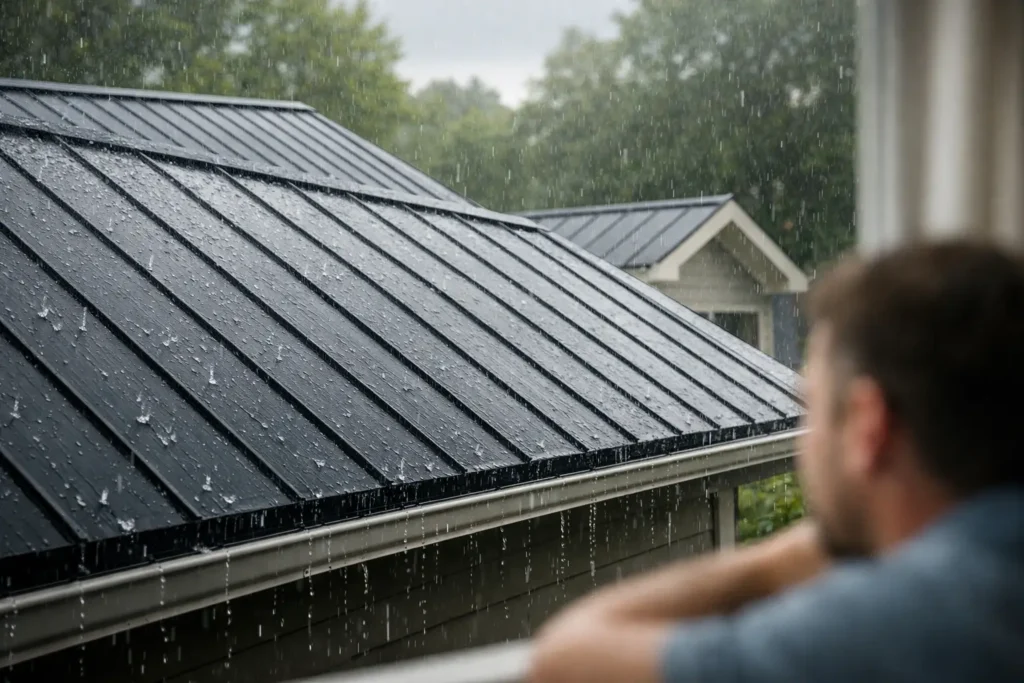
A hard Pennsylvania rain can make any roof noticeable. The real question homeowners ask is not whether they will hear rain at all, but whether a metal roof will make it loud enough to disrupt sleep, conversation, or daily life. So, are metal roofs noisy? On a properly designed and installed home, usually not in the way many people expect.
The old idea of a metal roof sounding like a drum usually comes from open barns, sheds, and older buildings where metal panels are installed directly over framing with little or no insulation below. A residential roof has several layers between the panel and the living space. Those layers make a significant difference.
Are Metal Roofs Noisy During Rain?
A metal roof can produce a sharper rain sound than an asphalt shingle roof, especially during a heavy downpour. Metal is a hard surface, so raindrops create a distinct tapping sound when they strike it. But that sound has to travel through the roof assembly, attic space, insulation, ceiling materials, and interior finishes before it reaches the room below.
In a well-built home, the difference is often modest. Many homeowners describe the sound as a soft, steady patter rather than a loud clatter. Some enjoy it. Others prefer the quieter feel of a heavily insulated roof system. Either way, the finished assembly matters much more than the panel material by itself.
An exposed metal roof on a pole building, garage, workshop, or agricultural structure may be noticeably louder because there are fewer sound-absorbing layers. That does not mean metal is the wrong choice for those buildings. It simply means expectations should match the building’s purpose. A storage building with open trusses will sound different from a finished home with a sealed attic and insulated ceiling.
What Determines How Loud a Metal Roof Sounds?
The noise level depends on the full roofing system, not just the metal panel. Homeowners comparing quotes should ask what will be installed beneath the panels and how the roof will be ventilated and insulated.
Insulation Does Most of the Work
Attic insulation is one of the best defenses against rain noise. Fiberglass, blown-in insulation, spray foam, and other properly selected insulation systems absorb sound while also helping control energy costs. A well-insulated attic can make the rain on a metal roof far less noticeable inside the home.
For a building with a finished ceiling directly beneath the roof deck, insulation becomes even more important. The right approach depends on the structure, roof design, ventilation plan, and how the space will be used. A workshop that is heated only occasionally needs a different solution than a year-round residence or barndominium.
Solid Sheathing Creates a Quieter Base
Metal roofing installed over solid roof decking is generally quieter than panels installed directly over open purlins. Solid sheathing adds mass, reduces vibration, and creates another barrier between weather and the interior.
In many reroofing projects, metal panels may be installed over an existing roof system when conditions allow and local requirements are met. This can add another layer of sound control, though it is not automatically the best choice for every home. The existing roof must be inspected for moisture damage, uneven surfaces, and structural concerns before anyone decides to cover it.
Underlayment Helps With More Than Water Protection
Underlayment is essential for managing moisture beneath a metal roof, but it can also help reduce sound transfer. Synthetic underlayments, self-adhered membranes in critical areas, and other approved materials can create a small but useful buffer between the roofing panels and deck.
It is not a substitute for insulation or proper installation. Still, it is one more reason a complete roofing proposal is more valuable than a price based only on panel gauge and color.
Panel Profile and Installation Matter
Standing seam panels, ribbed agricultural panels, and metal shingles do not all sound or perform exactly the same way. Fastener placement, panel spacing, trim details, and secure attachment affect how much a roof can vibrate in rain or wind.
A poorly installed metal roof may rattle, pop, or make unusual noises as temperatures change. Metal naturally expands and contracts with heat and cold. A qualified installer plans for that movement using the correct fastening method and spacing. Occasional quiet expansion sounds can happen, but persistent rattling is not something to dismiss as normal.
Rain Is Not the Only Sound to Consider
Heavy rain gets most of the attention, but hail, wind, branches, and snow movement can also create sound on any roof. Metal roofing is durable, which is one reason it appeals to homeowners and property owners dealing with Southwestern Pennsylvania weather. Durability, however, does not mean a roof is silent.
Hail can be loud on metal, particularly when stones are large enough to be heard on any hard surface. Asphalt shingles may soften that impact sound somewhat, but hail is still a significant weather event. The more important questions are whether the roof system can resist damage and whether it has been installed with the right details to manage water and wind.
Wind noise is usually less about the material and more about installation quality. Loose flashing, poorly secured panels, or worn fasteners can create whistling or rattling. Properly installed metal roofing should stay secure and quiet in normal wind conditions.
Snow can slide off a metal roof more readily than it does from textured shingles. That is a practical benefit in some situations, but it can create a sudden sound when snow releases. Snow retention systems may be appropriate above entrances, walkways, decks, driveways, or areas where falling snow could create a safety concern.
Metal Roofing Versus Asphalt Shingles for Noise
If a quiet interior is the only priority, a standard asphalt shingle roof may have a slight advantage because the granulated surface helps dampen impact noise. That advantage is most noticeable when comparing roof materials over a minimally insulated structure.
For a typical insulated home, the decision should involve more than sound. Metal roofs can offer long service life, strong wind performance, low maintenance, and a clean appearance. They may also be a practical choice for garages, farm buildings, commercial properties, and homes where owners want a durable roofing system that handles the region’s changing seasons.
Asphalt shingles remain a dependable option, especially when budget, appearance, and conventional roof design point in that direction. The right material depends on the structure, slope, budget, expected ownership period, and installation details. There is no one-size-fits-all answer, and a low upfront price is not always the best long-term value.
How to Keep a Metal Roof Quiet
If you are planning a metal roof for a home, finished garage, office, or barndominium, make sound control part of the conversation before materials are ordered. Ask whether the panels will go over solid decking, what underlayment is included, how attic insulation will be handled, and whether ventilation is part of the design.
For pole buildings and other open structures, consider whether you may finish or heat the space later. Adding insulation and interior liner panels during construction can be easier than retrofitting them after the building is complete. A building that starts as equipment storage may eventually become a workshop, hobby space, or business area.
It also pays to work with a contractor or supplier who understands the conditions around your property. Roof pitch, tree cover, snow load, nearby open fields, and the way a building is used all affect the best roofing plan. Tri County Door & Builders helps property owners weigh these practical details instead of treating every metal roof as the same product.
A metal roof should not sound like rain is falling directly into your living room. With solid decking, adequate insulation, quality underlayment, and careful installation, most homeowners hear only the weather outside – and that can be a reassuring sound when the roof above them is built to handle it.